| Edit | Map | Home |  |
New Post | New Gallery |
Support
|

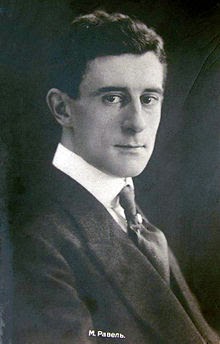 | |
Joseph Maurice Ravel (March 7, 1875 - December 28, 1937) is a French composer and conductor. He went down in history as one of the leading representatives of musical impressionism. Maurice Ravel was born on March 7, 1875 in the city of Sibur in the family of the Swiss automobile engineer Joseph Ravel (1832-1908) and Marie Deluir (1840-1916), who came from a simple Basque family. In 1882, he began to study the piano with Henri Guise [en], from 1887 he studied harmony with Charles René. The city of Sibur is located near the border with Spain, where his father, a passionate music lover, was serving at that time. It was the father who instilled in his son a love of music.
In 1889, Ravel entered the Paris Conservatory and graduated from it in the piano class. The young musician was helped by his teacher Charles de Berio, a famous pianist of that time. However, Ravel became interested in improvisation and composition after getting to know the work of one of the founders of musical impressionism, Eric Satie [source not specified 1977 days], as well as a personal meeting with another composer and pianist - Ricardo Vignes. It was after this that Maurice developed a passion for creating his own works .. Twenty and thirty years later, despite difficult personal relationships, Ravel repeatedly emphasized how much in his work he owed to Sati and called him nothing but his Forerunner or Precursor.
In the last year of his studies, he entered the class of the great French composer Gabriel Fauré. On his initiative, Ravel composed a cycle [source not specified 1813 days] of works to Spanish melodies [source not specified 1813 days] - "Habaneru", "Pavana on the Death of the Infanta", "Old Minuet". After graduating from the conservatory in 1900-1914, he wrote many works.
Maurice Ravel's work was not recognized in professional academic circles. Ravel participated in the competition for the Rome Prize three times in a row: in 1901, 1902 and 1903. The first time he lost the competition to Andre Caple (having won the so-called "Little Roman Prize"), the second time to the student of Professor Charles Lyonevi, Aimé Kuntz, and finally, for the third time, he was overtaken by Raoul Laparra, also a student of Lyonevi. In 1904, Ravel deliberately refrained from participating in the competition in order to gather strength for the last attempt. This was the last possible year for him, since in the future he could no longer claim to win the prize due to the fact that he was approaching the age limit established for the participants of the competition - thirty years old.
In 1905, Maurice Ravel, an innovative musician already widely performed and well-known in Paris (on the advice of Gabriel Fauré, who sympathized with him), asked for the last time to allow him to participate in the competition. As a result of the fourth and last nomination, the so-called "Ravel scandal" erupted. In response to his application, Maurice Ravel receives an evasive official refusal to enter the competition with a formal reference to age restrictions (which at that time had not yet arrived). Ravel could not set his age record for receiving the Rome Prize (and become the "oldest" laureate, as opposed to a member of the jury and the youngest laureate, Emil Paladil). The real reason for not being admitted to the competition lay not in his age, but in the irritation of the jury members with his "destructive, anti-musical" activity - the impressionistic aesthetics of his bright works, which at that time were already popular (for example, his famous "Play of Water" has already been performed many times ) ) [7] .
Commenting on the decision of the (English) Russian jury, the venerable academician Emil Paladil grumbled: "Monsieur Ravel is free to consider us untalented routiners, but let him not think that we can be taken for fools..." Ernest Reyer, Charles Leneve and the director of the Theodore Dubois Conservatory, caused a whole storm of indignation and protests both among musicians and the music-related press. The scandal acquired a particularly acute, anti-corruption" character, when, among other things, it became clear that absolutely all the candidates for the Great Roman Prize admitted to the competition in 1905 were students of the same professor Charles Lenev.
"Unprecedented cynicism of the jury!", "Shameful decision of biased judges!" — Parisian newspapers printed indignant reviews of composers, writers, artists and simply music lovers. Ravel accepted the decision of the academicians outwardly calmly and did not express himself on this matter. But the famous music critic Jean Marnot, all of whose sympathies were in the field of impressionism, which was gradually gaining strength, came out with a devastating article that ended with the following angry tirade: "For the sake of the future of French music, it is time to finally disperse this clique of pedants, hypocrites and swindlers of Paladil, Dubois Leneuve! .." (Jean Marnold, "le Temps", May 15, 1905) [8] .
The set of three surnames, named by Jean Marneau, was essentially not accidental, but was a collection of three symbols: "Academy, Conservatory and Professorship" - eternally opposed to all new and living art. |
Автор: Sonya Версія: 1 Мова: Англійська Переглядів: 0
|
Коротке посилання: https://www.sponsorschoose.org/a190
Коротке посилання на цю версію: https://www.sponsorschoose.org/n216
Автор - Sonya дата: 2023-05-31 07:24:12
Остання зміна - Sonya дата: 2023-06-03 16:39:01
|