| Edit | Map | Home |  |
New Post | New Gallery |
Support
|

 | |
How Baroque Music Shaped European CultureIf the Renaissance was Europe’s age of rebirth, the Baroque era (roughly 1600–1750) was its grand display of power, drama, and ornament. This was the age of candlelit palaces, powdered wigs, and gold-leafed ceilings — and the music matched the architecture. Baroque music wasn’t just entertainment; it was cultural engineering. It helped shape politics, religion, social life, and even how Europeans thought about art itself. 1. The Sound of PowerIn the courts of Louis XIV in France, Frederick the Great in Prussia, and countless dukes, electors, and princes, music became a display of authority.
When people heard this music, they didn’t just think, “That’s beautiful.” They thought, “That is power embodied in sound.” 2. The Language of FaithBaroque Europe was still deeply shaped by religion — and music was one of its most persuasive voices.
Church services became immersive experiences where art, architecture, and music worked together to lift the mind toward the divine. 3. The Birth of the OperaOpera emerged in the early Baroque as an experiment in fusing drama, poetry, and music — and quickly became Europe’s ultimate cultural export.
Opera spread across Europe, influencing theatre, literature, and even painting — because it taught audiences to expect drama, emotion, and spectacle as the highest form of art. 4. The Rise of the Individual ArtistBefore the Baroque, composers were often anonymous servants of the church or court. But this era saw the first “celebrity” musicians.
5. Music as Science and EmotionThe Baroque mind loved both reason and feeling — and music reflected that duality.
This marriage of intellect and emotion influenced European philosophy, encouraging the idea that art could be both beautiful and rationally constructed. 6. A Common European LanguageBaroque music was one of the first truly international art forms in Europe.
This cross-pollination created a shared cultural vocabulary — a unifying soundtrack for an otherwise politically fragmented continent. The LegacyWhen the Baroque era ended around 1750, its influence didn’t vanish — it evolved. The Classical and Romantic periods still drew on its innovations in harmony, orchestration, and form. Its vision of art as a powerful force in politics, religion, and society remained embedded in European culture.
Even today, Baroque music is everywhere — from film soundtracks to wedding processionals. Its mix of precision and passion still speaks to us because it reflects something timeless: the human desire to make life not just livable, but magnificent. via ChatGPT |
Author: Sonya Version: 1 Language: English Views: 0
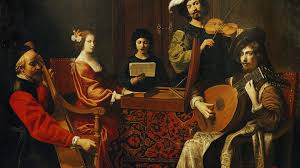
Picture: Source: https://www.google.com/url?sa=i&url=https%3A%2F%2Fcmbv.fr%2Fen%2Fintroducing-baroque%2Ffrench-baroque-music&psig=AOvVaw1XUC0iWCpfu9wSDMSxznc5&ust=1755096442818000&source=images&cd=vfe&opi=89978449&ved=0CBUQjRxqFwoTCMDsvvLBhY8DFQAAAAAdAAAAABAL
|
Short link: https://www.sponsorschoose.org/a360
Short link to this version: https://www.sponsorschoose.org/n391
Created by Sonya at 2025-08-12 08:01:58
Last modified by Sonya at 2025-08-12 09:28:07
|