| Edit | Map | Home |  |
New Post | New Gallery |
Support
|

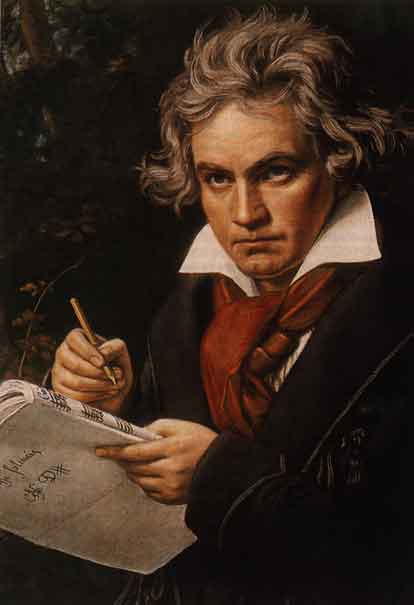 | |
Why Beethoven’s Ninth Symphony Is LegendaryPremiered in Vienna in 1824, Ludwig van Beethoven’s Symphony No. 9 in D minor didn’t just push the boundaries of music — it redrew them entirely. It was a work of staggering ambition, uniting symphonic power with human voice in a way the world had never heard before. Nearly two centuries later, it remains a cultural touchstone, celebrated not only for its musical brilliance but for the ideals it embodies. 1. A Symphony Like No OtherUntil Beethoven, symphonies were purely instrumental. In the Ninth, he broke tradition by adding a full chorus and soloists in the final movement — setting Friedrich Schiller’s Ode to Joy to music. It was a bold artistic statement that forever changed the form. 2. Written in SilenceBy the time he composed it, Beethoven was almost completely deaf. He could no longer hear the orchestra, yet his inner ear imagined the intricate harmonies and massive architecture of the piece. At its premiere, the audience’s applause was so thunderous that a soloist had to physically turn him around so he could see it. 3. The Ode to JoyThe final movement’s theme, Ode to Joy, has transcended classical music to become a universal anthem for unity and hope. It has been used in everything from political events to pop culture, even serving as the official anthem of the European Union. 4. Monumental Scale and PowerClocking in at over an hour, the Ninth is a journey from stormy darkness to blazing triumph. Its orchestration — including expanded brass, woodwinds, and percussion — delivers moments of intimate lyricism alongside colossal climaxes. 5. Influence Across CenturiesThe Ninth inspired composers from Brahms to Mahler and left an imprint on film scores, rock albums, and protest movements. Leonard Bernstein famously conducted it in 1989, replacing “Joy” with “Freedom” after the fall of the Berlin Wall. 6. More Than Music — A MessageIn a Europe fractured by wars and political upheaval, Beethoven’s choice of Schiller’s poem — celebrating universal brotherhood — was radical. The Ninth is as much a declaration of human ideals as it is a piece of music. Why It Still Matters
Beethoven’s Ninth endures because it is both a personal triumph over adversity and a universal call for unity. It’s a reminder that even in silence, the human spirit can create music that speaks to all people, in all eras.
via ChatGPT |
Author: Sonya Version: 1 Language: English Views: 0
Picture: Source: https://www.google.com/url?sa=i&url=https%3A%2F%2Fwww.1902encyclopedia.com%2FB%2FBEE%2Fludwig-van-beethoven.html&psig=AOvVaw0bSvqeyptAtOKtUaJEftXc&ust=1755202748124000&source=images&cd=vfe&opi=89978449&ved=0CBUQjRxqFwoTCJDvnffNiI8DFQAAAAAdAAAAABAS
|
Short link: https://www.sponsorschoose.org/a368
Short link to this version: https://www.sponsorschoose.org/n399
Created by Sonya at 2025-08-13 13:21:20
Last modified by Sonya at 2025-08-15 17:06:27
|