| Edit | Map | Home |  |
New Post | New Gallery |
Support
|

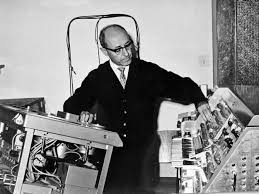 | |
The Birth of Electronic Music: The 1970s and the Sound of the FutureThe 1970s was the decade when music began to dream in circuitry. What had once been the realm of avant-garde laboratories and academic experiments spilled into nightclubs, radios, and concert halls. Synthesizers, drum machines, and sequencers were no longer just technical curiosities — they became the instruments of a new musical language. From Experiment to MainstreamElectronic music didn’t begin in the ’70s — pioneers like Karlheinz Stockhausen and Delia Derbyshire had been working with tape loops and oscillators since the 1950s and ’60s. But it was in this decade that technology caught up with imagination. Affordable, portable synthesizers like the Minimoog (1970) and ARP 2600 gave musicians the power to create entirely new timbres without a warehouse of equipment. Key Pioneers and MomentsKraftwerk – The Machine Becomes the BandFrom Düsseldorf, Kraftwerk crafted sleek, robotic tracks like Autobahn (1974) and Trans-Europe Express (1977) that sounded like postcards from the future. Their precise, metronomic beats became a blueprint for electronic pop and dance music. Giorgio Moroder – Synthesizers on the DancefloorIn Munich, Moroder fused disco’s pulse with electronic textures, most famously on Donna Summer’s I Feel Love (1977) — a track often called the bridge between disco and modern dance music. Brian Eno – Sonic LandscapesAfter leaving Roxy Music, Eno explored ambient music, creating albums like Another Green World (1975) and Ambient 1: Music for Airports (1978), which treated sound itself as a form of sculpture. Genres in Bloom
The Technology That Made It Possible
Why It Was a Turning PointBy the end of the ’70s, electronic instruments were no longer seen as novelties — they were legitimate tools for composition, performance, and pop chart domination. The decade closed with synthesizers firmly embedded in rock, disco, and experimental music, setting the stage for the synth-pop explosion of the 1980s and the birth of techno and house.
In short, the 1970s didn’t just add a new sound to music. It opened the door to an entirely new way of thinking about what music could be.
via ChatGPT |
Автор: Sonya Версия: 1 Язык: Английский Просмотров: 0
Рисунок: Ссылка на источник: https://www.google.com/url?sa=i&url=https%3A%2F%2Fwww.brainvoyagermusic.com%2Fhistory-of-electronic-music%2F&psig=AOvVaw0czVQ_HFw0Ly32VDEFs4Cp&ust=1755202160970000&source=images&cd=vfe&opi=89978449&ved=0CBUQjRxqFwoTCPiGzN7LiI8DFQAAAAAdAAAAABAK
|
Короткая ссылка: https://www.sponsorschoose.org/a365
Короткая ссылка на эту версию: https://www.sponsorschoose.org/n396
Автор - Sonya дата: 2025-08-13 13:11:00
Последнее изменение - Sonya дата: 2025-08-15 17:06:27
|