| Edit | Map | Home |  |
New Post | New Gallery |
Support
|

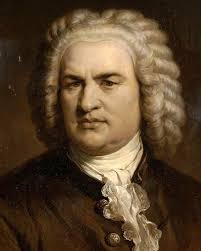 | |
The Genius of Johann Sebastian BachIf music were a cathedral, Johann Sebastian Bach would be its master builder — chiseling melodies like stone, laying harmonic foundations so strong that centuries of performers still walk through them without a crack appearing. Bach was born in 1685 in Eisenach, Germany, into a family where music was not just a profession, but practically a genetic trait. Nearly every male relative was a musician, and dinner conversation probably sounded like a rehearsal. Yet Bach wasn’t a mere heir to tradition — he absorbed it all, then reshaped it into something far grander. A Mind Like Clockwork, a Heart Like FireBach had the precision of a watchmaker. His fugues and canons are intricate gearworks of sound, each part turning with perfect timing. Take the Air on the G String. It moves at a pace that feels like a heartbeat slowing down at the end of a long day. Or the Goldberg Variations, where a simple aria blossoms into thirty completely different worlds — some dancing, some meditative, some full of playful mischief. He Worked Like a Man Who Never SleptIn Leipzig, Bach was responsible for composing a new cantata every single week for church services. That’s not “write a song and hum it in,” that’s fully orchestrated, choir-sung, organ-supported music — in seven days. It’s the equivalent of a novelist producing a polished short story every Sunday for years, without missing a deadline. The sheer output is staggering — over 1,000 surviving works. And remember: he did this without caffeine-fueled laptops, copy-paste functions, or AI assistants. He Could Recycle His Own GeniusBach wasn’t above self-borrowing. A violin concerto could quietly reappear as a harpsichord concerto, or a church cantata aria might slip into an orchestral suite. But this wasn’t laziness — it was like a painter reworking a theme in a different light. Each transformation revealed something new. The Spiritual EngineerBach once signed his manuscripts Soli Deo Gloria — “To God Alone the Glory.” Whether you share his faith or not, it’s clear he saw music as a way to touch the eternal. In works like the Mass in B Minor or St. Matthew Passion, he creates moments that feel as though the ceiling of the church has opened and something vast is pouring in. And yet, the same man could write coffee-themed cantatas — literally, a miniature opera about a daughter’s caffeine addiction — proving that even the great masters can be playful. Beyond Time and PlaceBach never traveled far from home, but his music now travels everywhere. Jazz pianists riff on his counterpoint. Electronic musicians loop his progressions. Cellists, pianists, guitarists — all return to him when they want to remember how music works at its most essential level. It’s said that when Beethoven first heard Bach’s music, he exclaimed:
That’s still true. You can dip your toes into Bach — or dive deep and never touch the bottom. Why We Still ListenBach doesn’t just give you melodies to hum. He gives you structures to inhabit. You can live inside his works — wander up and down their staircases of counterpoint, stand in their windows of harmony, and watch light pass across their walls.
And when the music stops, you feel — not just entertained — but somehow expanded, as if your mind has been subtly tuned, your soul slightly polished. via ChatGPT |
Автор: Sonya Версія: 1 Мова: Англійська Переглядів: 0
Рисунок: Посилання на джерело: https://www.google.com/url?sa=i&url=https%3A%2F%2Fwww.instagram.com%2Fp%2FDM7YrlTzskN%2F&psig=AOvVaw09Z-FCKsrBNlJDySaWvpCz&ust=1755096215271000&source=images&cd=vfe&opi=89978449&ved=0CBUQjRxqFwoTCNCO8YXBhY8DFQAAAAAdAAAAABAE
|
Коротке посилання: https://www.sponsorschoose.org/a359
Коротке посилання на цю версію: https://www.sponsorschoose.org/n390
Автор - Sonya дата: 2025-08-12 07:45:19
Остання зміна - Sonya дата: 2025-08-12 09:28:07
|