| Edit | Map | Home |  |
New Post | New Gallery |
Support
|

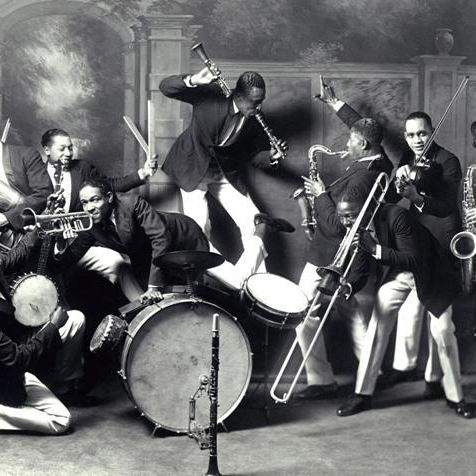 | |
The Rise of Jazz in the 20th CenturyIf the 19th century had Beethoven’s thunder and Brahms’s warmth, the 20th century began with a new rhythm in its step. Jazz was not born in royal courts or opera houses — it came from the streets, clubs, riverboats, and backrooms of America, carrying with it the voices, struggles, and joys of everyday life. Jazz was more than music. It was a way of thinking, a way of moving through time, and, eventually, a global cultural revolution. 1. Roots in the Deep SouthThe story begins in New Orleans at the turn of the century, where African, Caribbean, and European musical traditions collided.
This stew of influences boiled over in the city’s dance halls and “second line” parades, where the beat of the drum could pull a crowd into motion without a single word. 2. The First Great Migration of SoundAs African Americans moved north during the Great Migration (1916–1970), they carried jazz with them.
Jazz was no longer just a local phenomenon — it was becoming America’s soundtrack. 3. The Jazz Age and Cultural LiberationThe 1920s roared, and jazz roared with them. Prohibition ironically fueled the music’s spread — speakeasies needed live entertainment, and jazz delivered both excitement and a sense of rebellion.
Jazz was now both a sound and a social statement. 4. Swing, the Soundtrack of a GenerationBy the 1930s and ’40s, jazz had grown into the big band swing era.
Swing music was democratic — it made people dance, whether they were in a glamorous city ballroom or a dusty town hall. 5. Bebop and the Artist’s RevolutionIn the 1940s, a new generation of musicians wanted more than danceable tunes — they wanted complexity, speed, and freedom.
Bebop turned jazz into an intellectual art form, the equal of classical music in sophistication. 6. Cool, Hard, and FreePost-war jazz splintered into many voices:
By the 1960s, jazz was as much about personal voice as shared style. 7. Jazz Goes GlobalBy mid-century, jazz was traveling everywhere — Paris cafés, Tokyo nightclubs, Cape Town street corners.
8. Legacy and Living LanguageToday, jazz is not a museum piece. It’s still evolving — in hip-hop samples, neo-soul grooves, and electronic improvisations. Artists like Kamasi Washington, Esperanza Spalding, and Snarky Puppy carry the flame, blending jazz with contemporary genres. Jazz’s rise in the 20th century was the story of America finding its own musical identity — and then sharing it with the world. Born from struggle and improvisation, it proved that freedom and structure could dance together, and that a single horn solo could tell more truth in three minutes than a thousand speeches. via ChatGPT |
Автор: Sonya Версія: 1 Мова: Англійська Переглядів: 0
Рисунок: Посилання на джерело: https://www.google.com/url?sa=i&url=https%3A%2F%2Fscalar.usc.edu%2Fworks%2Fjazz-education-apprenticeship%2Fhistory-of-jazz-education-and-apprenticeship-1&psig=AOvVaw3PvCcsSunbFy6wnmSE7Chv&ust=1755102522090000&source=images&cd=vfe&opi=89978449&ved=0CB
|
Коротке посилання: https://www.sponsorschoose.org/a361
Коротке посилання на цю версію: https://www.sponsorschoose.org/n392
Автор - Sonya дата: 2025-08-12 09:30:35
Остання зміна - Sonya дата: 2025-08-15 17:06:27
|