The gallery with all subgalleries and compositions will be permanently deleted and cannot be recovered. Are you sure?
Executing...

Name or e-mail of your friend, to whom the message will be sent:

Please, edit the text of the message you are about to send.

The importance of tea ceremonies in Japan

Sonya

The Importance of Tea Ceremonies in Japan

In Japan, tea is not just a drink. It is a philosophy, a performance, and a way of life. Known as 茶道 (sadō or chadō, “the Way of Tea”), the Japanese tea ceremony has been practiced for centuries, blending art, spirituality, and social connection into a ritual of remarkable depth.


1. Origins of the Tea Ceremony

Tea first arrived in Japan from China around the 9th century, introduced by Buddhist monks who used it to stay awake during meditation.

  • By the 15th and 16th centuries, tea preparation had transformed into a refined cultural practice.

  • The most influential figure was Sen no Rikyū (1522–1591), who established many of the core principles still followed today.


2. More Than Drinking Tea

At its heart, the tea ceremony is not about the beverage itself, but about mindfulness and connection.

  • Every movement — from folding the cloth to whisking the tea — is deliberate and graceful.

  • The ritual teaches harmony, respect, purity, and tranquility — the four ideals of chadō.

In this sense, the tea ceremony is as much meditation as hospitality.


3. The Space and Atmosphere

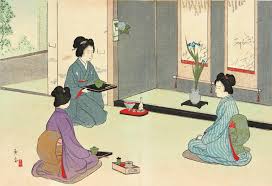
  • Ceremonies often take place in a tea house, designed with simplicity and natural beauty in mind.

  • Guests enter through a small, low door, symbolizing humility — everyone bows, regardless of status.

  • Decorations are minimal: a single flower, a scroll, or a piece of pottery, each chosen carefully to reflect the season or occasion.

This environment creates a sense of stepping outside everyday concerns and into a sacred moment.


4. Matcha: The Tea at the Center

The tea used is matcha, a finely ground green tea powder.

  • Prepared with hot water and whisked into a frothy, vibrant green drink.

  • Bitter and intense, but balanced by the sweetness of accompanying wagashi (traditional sweets).

  • Guests savor it slowly, appreciating both flavor and form.


5. Symbolism in Every Gesture

Every part of the ceremony holds meaning:

  • The host’s preparation reflects care and hospitality.

  • The utensils (bamboo whisk, tea bowl, scoop) are often handcrafted and treasured.

  • The silence is as important as the sound — guests listen to the boiling kettle, the whisking of tea, the rustle of robes.

It is an art form where even the smallest detail expresses thoughtfulness.


6. Why It Still Matters Today

In today’s fast-paced world, the Japanese tea ceremony offers something timeless:

  • A chance to slow down and focus on the present.

  • A ritual that connects people, placing emphasis on respect and shared experience.

  • A cultural practice that preserves centuries of tradition while continuing to evolve.

For many, participating in chadō feels like stepping into a living poem — fleeting, delicate, and profound.


Did You Know?


  • The phrase ichi-go ichi-e (一期一会), often linked to tea ceremony, means “one time, one meeting.” It reminds participants that each encounter is unique and will never come again.

  • Tea utensils are so valued that some have been passed down for centuries, treated with the same reverence as art masterpieces.


via ChatGPT

Author:   Sonya  Version:  1  Language: English  Views: 0

 Rating:  0 by 0

Picture: Source: https://www.google.com/url?sa=i&url=https%3A%2F%2Fmai-ko.com%2Ftravel%2Fculture-in-japan%2Ftea-ceremony%2Fjapanese-tea-ceremony%2F&psig=AOvVaw2RNqujoOvNP8-3GaasOVeP&ust=1755465316035000&source=images&cd=vfe&opi=89978449&ved=0CBUQjRxqFwoTCLihlIegkI8DF

Short link: https://www.sponsorschoose.org/a386
Short link to this version: https://www.sponsorschoose.org/n417
Created by Sonya at 2025-08-16 14:16:17
Last modified by Sonya at 2025-08-17 13:22:07