| Edit | Map | Home |  |
New Post | New Gallery |
Support
|

 | |
The Beauty of Haiku PoetryHaiku might be one of the smallest forms of poetry, but its impact is enormous. These tiny three-line poems, traditionally following a 5-7-5 syllable pattern, have a unique power: in just a handful of words, they can capture the essence of life, nature, and emotion. They are minimalistic yet infinite in depth, like a single drop of water reflecting the entire sky. The origins of haiku trace back to Japan in the 17th century, where poets like Matsuo Basho began to explore how simplicity could reveal the profound. Basho didn’t write long, complex poems. Instead, he observed the world around him: the quiet of a moonlit night, the whisper of autumn leaves, the first snow settling on a temple roof. Through his haikus, he transformed ordinary moments into extraordinary experiences. What makes haiku truly remarkable is its focus on the fleeting. Life is full of moments that pass too quickly — a bird taking flight, a ripple across a pond, a single blossom falling from a tree. Haiku captures these transient experiences and invites the reader to pause, reflect, and notice the beauty that often goes unseen. There is no rush. Every word is deliberate, every syllable counts. A classic haiku often contains two key elements: kigo, or a seasonal reference, and kireji, a “cutting word” that creates a pause or contrast, giving the poem a subtle tension or depth. These tiny technical details might seem rigid at first, but they serve to enhance the power of the poem. A haiku isn’t about saying everything; it’s about creating a space for thought, feeling, and imagination. Consider the imagery of a single cherry blossom drifting to the ground. In one short poem, a haiku can evoke beauty, impermanence, and even a touch of melancholy. That is its genius: the ability to suggest entire worlds without spelling them out. It is like looking at a frozen moment through a microscope — something small becomes vast. Haiku is not just about nature, though nature is its most common subject. Over time, poets have used the form to capture human emotion, urban life, or philosophical reflection. The brevity of haiku forces clarity, discipline, and mindfulness. Writing a haiku is not simply about counting syllables; it’s about learning to see, to listen, to experience life fully. The reader, too, plays a role. A haiku’s beauty often lies in its openness, its invitation to interpretation. Two people might read the same haiku and see different images, feel different emotions, or connect it to entirely separate experiences. In this way, a haiku is a shared journey between writer and reader — a tiny spark that ignites imagination. In our fast-paced world, haiku feels more relevant than ever. It teaches patience, observation, and appreciation for the small wonders of life. A morning dew drop, the sound of a distant bell, the fleeting shadow of a cloud — these are not insignificant; they are everything, if we take the time to notice. Haiku reminds us that poetry doesn’t need pages of words to be profound. Sometimes, a single line is enough to open a window into the heart of the world. The beauty of haiku is also its humility. It doesn’t boast or overwhelm. It whispers. It teaches us that brevity can be powerful, that simplicity can reveal truth, and that even the tiniest moment can hold eternity. In a few lines, haiku captures joy, sadness, wonder, and reflection — a reminder that the world, in all its complexity, can be held in a handful of words. Writing or reading haiku becomes a form of meditation. It slows the mind and sharpens the senses. It asks us to pay attention, to feel deeply, and to find meaning in the ordinary. And perhaps that is why haiku has endured for centuries, spreading far beyond Japan to inspire poets around the world.
In short, haiku is proof that sometimes less is more, that silence can speak as loudly as sound, and that the simplest forms often carry the greatest depth. A haiku teaches us to see the world anew, to find beauty in the brief, and to understand that a few words, carefully chosen, can hold the weight of the universe.
via ChatGPT |
Автор: Sonya Версия: 1 Язык: Английский Просмотров: 0
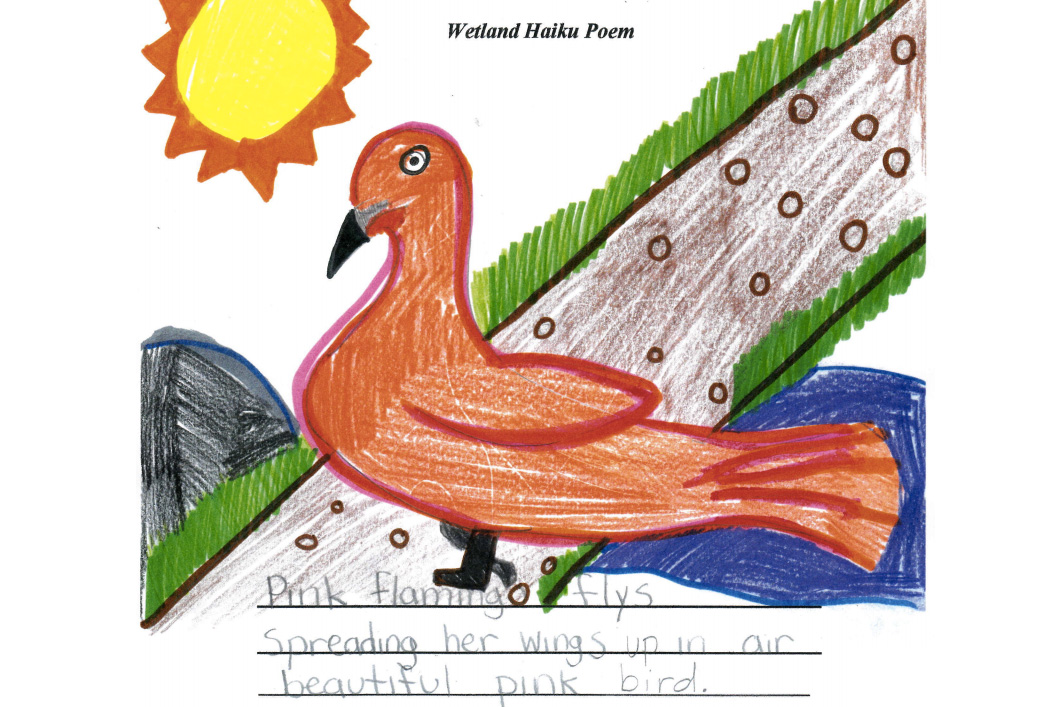
Рисунок: Ссылка на источник: https://www.google.com/url?sa=i&url=https%3A%2F%2Fkids.mongabay.com%2Fhaiku-poems%2F&psig=AOvVaw1BuT_SoZkVL9nR7YEfEira&ust=1755466970964000&source=images&cd=vfe&opi=89978449&ved=0CBUQjRxqFwoTCJjx36OmkI8DFQAAAAAdAAAAABAE
|
Короткая ссылка: https://www.sponsorschoose.org/a392
Короткая ссылка на эту версию: https://www.sponsorschoose.org/n423
Автор - Sonya дата: 2025-08-16 14:44:56
Последнее изменение - Sonya дата: 2025-08-16 15:08:30
|