| Edit | Map | Home |  |
New Post | New Gallery |
Support
|

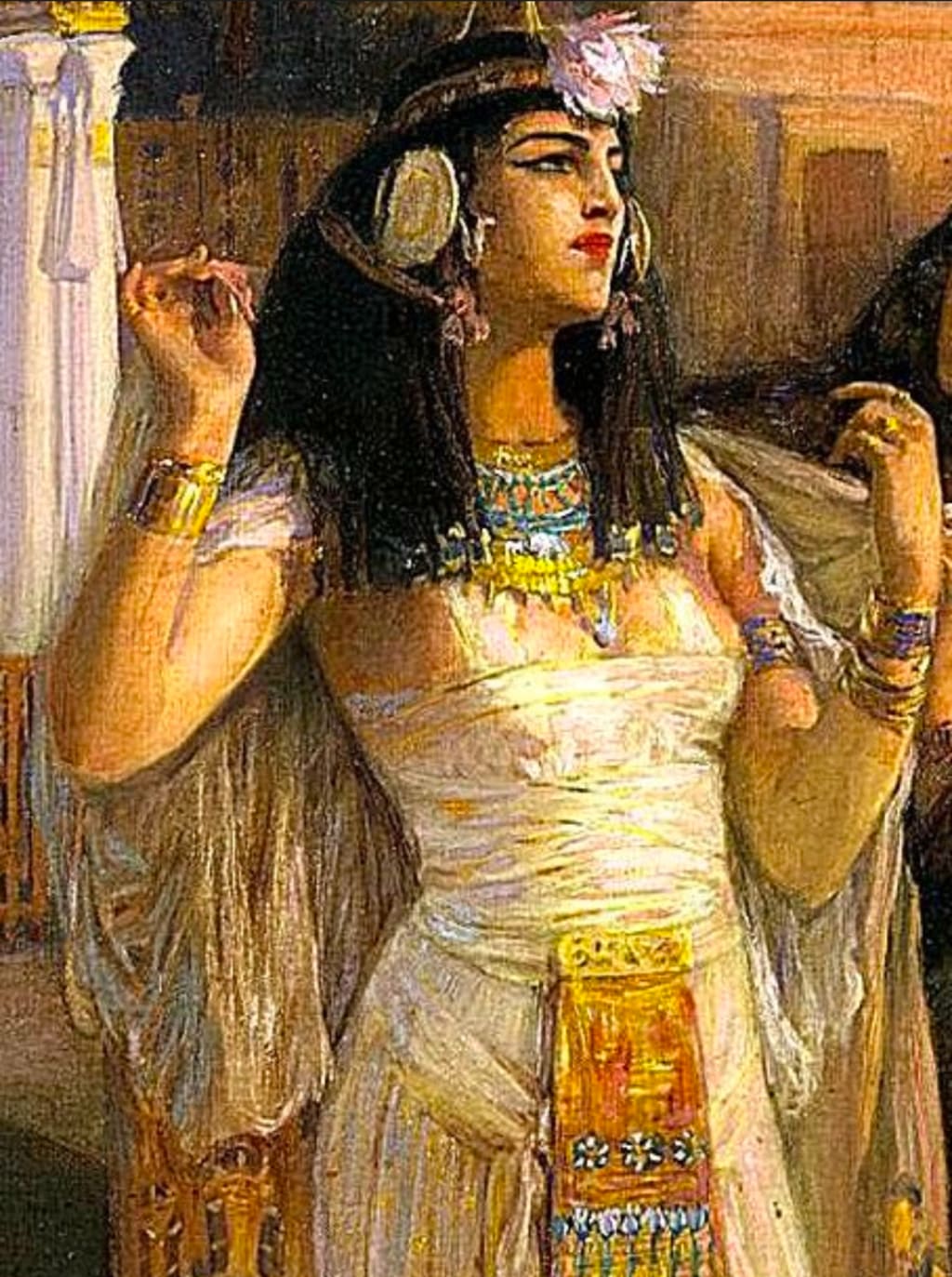 | |
Cleopatra’s Political Strategies: The Queen Who Played the Game of EmpiresThe year is 51 BCE. On the banks of the Nile, in the glittering palaces of Alexandria, a young woman ascends the throne of Egypt. Her name is Cleopatra VII, the last of the Ptolemaic dynasty. She is barely eighteen, sharing power uneasily with her younger brother. Egypt is a rich kingdom, but one under shadow — squeezed by Rome’s growing influence, riven by court intrigues, and watched by rivals eager to take her crown. In this treacherous world, Cleopatra would not survive on beauty alone, though later generations would paint her as little more than a seductress. Instead, she wielded something far sharper: political intelligence, theatrical charisma, and an uncanny ability to turn weakness into power. A Kingdom at Risk Unlike her Greek-speaking predecessors, Cleopatra did something radical: she embraced Egypt itself. She learned the Egyptian language (the first of her dynasty to do so), styled herself as a living goddess, and presented herself as Pharaoh in the native tradition. This earned her the loyalty of her people, grounding her rule in both tradition and innovation. But loyalty at home was not enough. The real struggle was with Rome — the rising empire that held Egypt’s fate in its hands. The Julius Caesar Gambit Legend tells of how she gained access to Caesar in 48 BCE. Denied entry to the palace where Caesar was staying, she had herself smuggled into his quarters rolled inside a carpet. When it was unrolled, out stepped Cleopatra — young, intelligent, and dazzling in presence. Whether the story is embroidered or true, the effect was the same: Caesar was captivated, not only by her beauty but by her wit and political sharpness. Together, they defeated her brother’s forces. Cleopatra was restored to the throne, now as Caesar’s ally and lover. Their union secured Egypt’s independence for the moment, tying her fate to Rome’s greatest general. She even bore him a son, Caesarion, whom she promoted as Caesar’s heir — a bold move that hinted at ambitions far beyond Egypt. Aligning with Mark Antony Their meeting in 41 BCE became the stuff of legend. Cleopatra sailed to meet Antony in Tarsus on a gilded barge with purple sails, dressed as the goddess Aphrodite, surrounded by musicians, incense, and luxury. It was political theater at its finest. Antony, a man of ambition and appetite, was overwhelmed. Cleopatra had secured her next great Roman protector. Their alliance was both romantic and strategic. Together, they ruled east of Rome’s empire like king and queen, presenting themselves as the living Dionysus and Isis. Cleopatra supplied Antony with wealth, ships, and grain; Antony offered military power and legitimacy. Through him, she dreamed not only of preserving Egypt but of building a new empire centered in the East. A Queen Against an Empire The conflict came to a head at the Battle of Actium in 31 BCE. Antony and Cleopatra’s forces were defeated, their empire of ambition crumbling. A year later, as Octavian closed in, both chose death over capture — Antony falling on his sword, Cleopatra by the infamous bite of an asp (or, some suggest, poison). Her death marked the end of the Ptolemaic dynasty. Egypt became a Roman province, its independence gone. Yet Cleopatra’s legend lived on. The Strategy Behind the Legend
The Last Pharaoh
Cleopatra did not survive Rome — no one could — but she outwitted it for nearly twenty years. She was not simply Rome’s lover, but its rival, a queen who played the empire’s game and nearly won.
via ChatGPT |
Author: Sonya Version: 1 Language: English Views: 0
Picture: Source: https://www.google.com/url?sa=i&url=https%3A%2F%2Fvocal.media%2Fhistory%2Fhow-cleopatra-came-to-power-in-egypt-and-what-she-accomplished-during-her-reign&psig=AOvVaw2SZfQrshLXbcQott-AFN8T&ust=1755723688172000&source=images&cd=vfe&opi=89978449&ved=0CB
|
Short link: https://www.sponsorschoose.org/a421
Short link to this version: https://www.sponsorschoose.org/n452
Created by Sonya at 2025-08-19 14:02:53
Last modified by Sonya at 2025-08-22 11:13:03
|