| Edit | Map | Home |  |
New Post | New Gallery |
Support
|

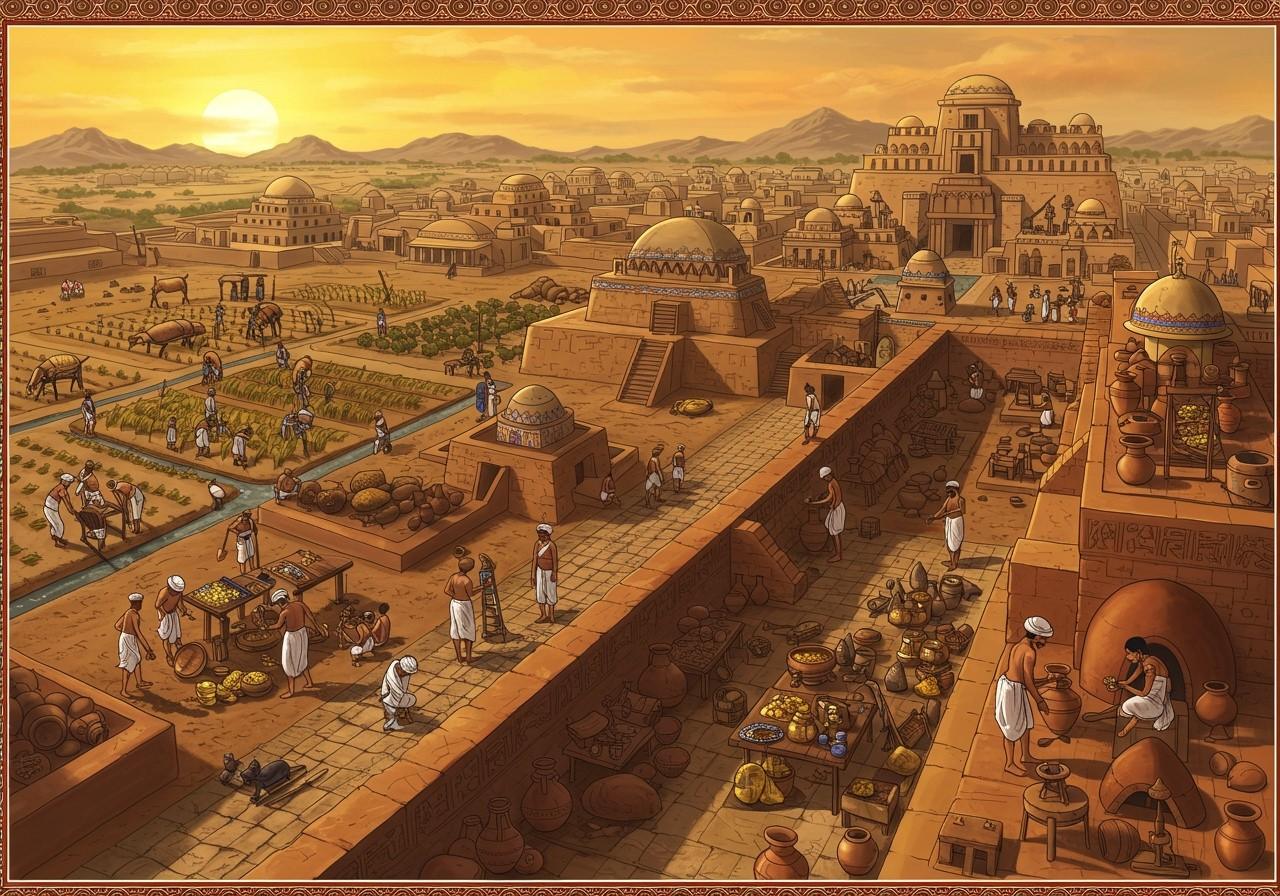 | |
The Indus Valley Civilization: Cities Before TimeLong before the pyramids of Giza had reached their peak, before the philosophers of Greece asked their great questions, and before Rome laid its first stone, there was a civilization flourishing quietly along the banks of the Indus River. Hidden for millennia beneath dust and earth, its cities — Harappa and Mohenjo-Daro — were only rediscovered in the 20th century. What archaeologists found astonished the world: a society so advanced, so well-planned, and yet so mysterious, that it continues to puzzle us today. A World Along the River Unlike kingdoms of war and towering monuments, the Indus Valley civilization seemed built around community and order. Its people left behind no great temples, no vast statues of kings, no tales of conquering armies. Instead, they built cities — precise, organized, and astonishingly modern. The Cities of Order At the heart of the city stood the Great Bath, a massive public water tank. Scholars debate its purpose: was it for ritual purification, communal gatherings, or civic pride? Whatever its use, it revealed a people who valued order, cleanliness, and collective life. Trade and Craft In workshops, artisans shaped intricate jewelry of gold and semi-precious stones. Beads of carnelian, carefully polished, were strung into necklaces. The wheel turned not only for pottery but for carts that rumbled along the trade routes. These were people of skill, connecting worlds through rivers and roads. The Mystery of Their Writing Were these signs records of trade? Names of rulers? Religious symbols? We do not know. The Indus script stands as one of the great unsolved mysteries of human history. Life Without Kings? Religion, too, is a puzzle. Small figurines hint at fertility cults. Carvings suggest reverence for animals like bulls and elephants. Some even see early echoes of Hinduism in their symbols. Yet, like their writing, much of their spiritual world remains hidden. Decline and Disappearance And so the Indus Valley civilization disappeared from memory — not mentioned in later Indian epics, not remembered in oral tradition. For thousands of years, it slept beneath layers of soil, until chance excavations in the 1920s revealed its brick streets once again. A Legacy in Silence To walk through the ruins of Mohenjo-Daro is to walk through shadows. You see the wells, the drains, the carefully planned streets. You sense a civilization deeply practical, deeply organized, and strangely modern. And you wonder: who were these people, and why did they vanish?
The Indus Valley civilization reminds us that history is not only the story of conquerors and empires. Sometimes, it is the quiet builders, the traders, the ordinary families who leave behind legacies of order and design. Their walls may have crumbled, their language may remain undeciphered, but their vision — of cities planned with care and life lived in community — still speaks across 4,000 years.
via ChatGPT |
Author: Sonya Version: 1 Language: English Views: 0
Picture: Source: https://www.google.com/url?sa=i&url=https%3A%2F%2Fwww.poojn.in%2Fpost%2F20620%2Findus-valley-civilization-trade-agriculture-and-economy-explained%3Fsrsltid%3DAfmBOopuk7ZBiu3GlUHmp6L1GCNlERBOCdeMsGryH4vpOUTkBRH_hfAv&psig=AOvVaw0GlKVxURNqbCniL1VrE06z&u
|
Short link: https://www.sponsorschoose.org/a420
Short link to this version: https://www.sponsorschoose.org/n451
Created by Sonya at 2025-08-19 14:00:13
Last modified by Sonya at 2025-08-22 11:13:03
|