| Edit | Map | Home |  |
New Post | New Gallery |
Support
|

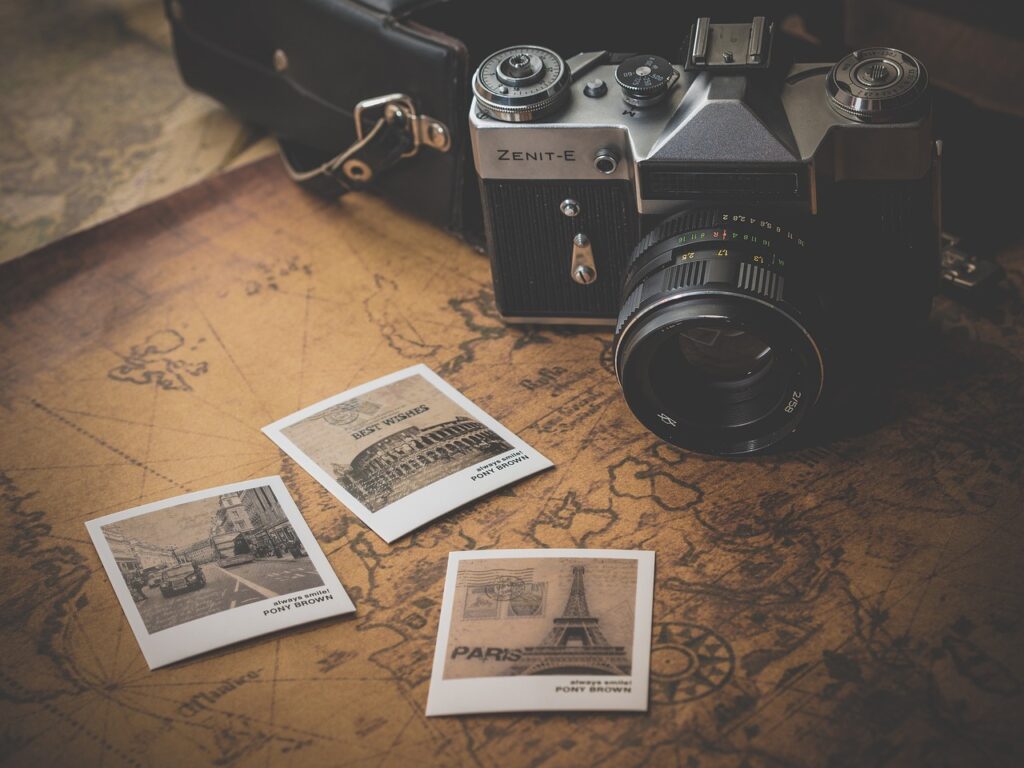 | |
The Development of Photography: Capturing Light, Freezing TimeImagine living in a world where memory fades quickly, where portraits require hours of sitting for a painter’s brush, and where landscapes or fleeting smiles exist only in the moment. For most of human history, that was reality. Then, in the early 19th century, humanity discovered a way to trap light itself — and with it, to hold onto moments forever. The birth of photography was not only a technological breakthrough but a cultural revolution. It changed how we see ourselves, how we remember, and how we share our lives. The First Experiments: Painting with Light In the early 1800s, inventors began experimenting with chemicals that darkened when exposed to light. Among them was a Frenchman, Joseph Nicéphore Niépce, who in 1826 managed to create the world’s first permanent photograph. He called it a heliograph — a “sun drawing.” The image, a view from his window, took eight hours of exposure. The result was grainy and ghostlike, but revolutionary: for the first time in history, light had written its own story. Daguerre and the First Popular Photographs Crowds marveled at these frozen moments: city streets, portraits of dignitaries, and ordinary faces etched in silver. For the first time, the likeness of a loved one could be captured with stunning accuracy. Portrait painting, once the privilege of the wealthy, suddenly faced competition. Photography was democratizing memory. Negative to Positive: The Breakthrough of Talbot Photography Goes Public Photography became not just an art, but an archive of life. It captured not only the grand and ceremonial, but the intimate and ordinary. Photography as Witness This role would only deepen. Over time, photography became a tool of journalism, science, and social change. It exposed injustice, recorded progress, and revealed worlds previously unseen. The Age of Portability This innovation transformed photography from a professional practice into a universal hobby. Family albums blossomed. Vacations, birthdays, and everyday joys were preserved in images. The camera became an extension of memory itself. From Black-and-White to Color Into the Digital Age Then came the smartphone, putting a camera in every pocket. Billions of images are now created daily, more in a year than in the entire 19th century. The photograph, once rare and precious, has become a universal language of communication — from social media posts to satellite imagery, from scientific research to personal memory. Photography’s Dual Nature But it also raises questions. Does photography show truth, or can it deceive? Can an image ever be fully objective, or is it always shaped by the eye — and the choices — of the photographer? Freezing Time Where once memories lived only in stories, today they live in images. The camera, in all its forms, has given us a way to freeze time — and in doing so, to see the world, and ourselves, anew.
via ChatGPT |
Автор: Sonya Версия: 1 Язык: Английский Просмотров: 0
Рисунок: Ссылка на источник: https://www.google.com/url?sa=i&url=https%3A%2F%2Fwww.kunstloft.com%2Fmagazine%2Fthe-power-of-photography%2F%3Fsrsltid%3DAfmBOoqfXUXDzsQoqo60E7lTAy7zX5IK6WcIA7YIHnRgxJcKwexu9MIC&psig=AOvVaw3MWsIlwqVNAzagzhdE68x5&ust=1755861756018000&source=images&cd=
|
Короткая ссылка: https://www.sponsorschoose.org/a424
Короткая ссылка на эту версию: https://www.sponsorschoose.org/n455
Автор - Sonya дата: 2025-08-21 04:24:07
Последнее изменение - Sonya дата: 2025-08-22 11:13:02
|