| Edit | Map | Home |  |
New Post | New Gallery |
Support
|

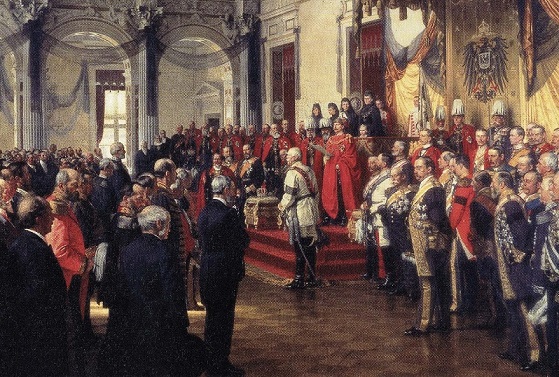 | |
The Unification of Germany: When a Divided Nation Became OneFor forty years, Germany was a country cut in half. On maps, it appeared as two states: the Federal Republic of Germany (West Germany) and the German Democratic Republic (East Germany). But on the ground, it was much more than a political division — it was families torn apart, friends separated, and a wall of concrete and barbed wire that sliced through the heart of Berlin. The unification of Germany in 1990 was not just a political act; it was the healing of a deep wound left by the Cold War. It was the moment when an entire people, divided by ideology and superpower rivalry, came together again. But the road to unity was anything but simple. From War to Division By 1949, two German states were born. In the west, a democratic, capitalist society tied to the United States and Western Europe. In the east, a communist state under Soviet influence. Berlin, the old capital, was also divided, even though it lay deep in the Soviet zone. The most brutal symbol of this divide came in 1961, when East German authorities, with Soviet backing, built the Berlin Wall. Overnight, families found themselves separated. A wall of stone and steel, guarded by soldiers with orders to shoot, became the frontline of the Cold War. Life on Both Sides Still, many longed for freedom. Thousands tried to flee to the West, some making it across, many not. The Wall was not just concrete; it was a reminder of what was lost. The Winds of Change In East Germany, people began to gather in churches, holding peaceful demonstrations demanding change. Week by week, the crowds grew. In Leipzig, tens of thousands marched, chanting for freedom and reform. The East German leadership tried to hold firm, but the pressure became overwhelming. Then came the night that changed everything: November 9, 1989. The Wall Falls Crowds swarmed the Berlin Wall, climbing on top, chipping away with hammers, celebrating with tears and laughter. East and West Berliners embraced in the streets, after decades of separation. Television cameras broadcast the images around the world: the Wall that had divided a nation was no longer standing in the way. The Road to Unity But momentum was unstoppable. In the months that followed, East Germans flooded into the West. The two German governments began talks. International negotiations — involving the United States, the Soviet Union, Britain, and France — cleared the way. Finally, on October 3, 1990, the German Democratic Republic formally dissolved, and its territory joined the Federal Republic of Germany. The country was officially reunified. Berlin, once divided, became the capital of a united nation. A New Beginning Why It Matters Today, October 3rd is celebrated as German Unity Day, a reminder of how fragile freedom can be, and how powerful it is when people demand it together.
From the rubble of war, through decades of division, to the joy of reunification, Germany’s story is one of resilience, hope, and the belief that no wall can stand forever.
via ChatGPT |
Автор: Sonya Версія: 1 Мова: Англійська Переглядів: 0
Рисунок: Посилання на джерело: https://www.google.com/url?sa=i&url=https%3A%2F%2Fgermanculture.com.ua%2Fgerman-history%2F19th-century-and-german-unification%2F&psig=AOvVaw2vxTuaSfcwzUzCeiAKfHWO&ust=1755633932067000&source=images&cd=vfe&opi=89978449&ved=0CBUQjRxqFwoTCNDzn5qUlY8DFQA
|
Коротке посилання: https://www.sponsorschoose.org/a413
Коротке посилання на цю версію: https://www.sponsorschoose.org/n444
Автор - Sonya дата: 2025-08-18 13:06:57
Остання зміна - Sonya дата: 2025-08-22 13:11:34
|