Grasslands and Their Wildlife: The Heartbeat of the Plains
Stretching across continents, from the endless prairies of North America to the vast savannas of Africa, grasslands are some of the most expansive and vital ecosystems on Earth. At first glance, they might seem simple — a sea of grasses swaying in the wind, punctuated by occasional trees or shrubs. But look closer, and a complex, thriving world emerges, full of life, movement, and survival strategies honed over millennia.
The Sea of Grass
Grasslands cover roughly one-fifth of the Earth’s land surface. They exist where rainfall is too low to support forests but enough to prevent deserts, creating ideal conditions for grasses to dominate. These plants are resilient: they bend under strong winds, survive grazing animals, and regrow quickly after fire. Fire, in fact, plays a key role in maintaining grasslands, recycling nutrients and preventing woody plants from taking over.
Grasses are more than scenery. Beneath the surface, their roots form dense networks that anchor the soil, store carbon, and regulate water. They are the foundation of life in the grasslands — a source of food and shelter for countless creatures.
The Wildlife of the Grasslands
Grasslands are home to some of the most iconic and fascinating animals on Earth. Their wide-open spaces allow herbivores to roam and predators to hunt with strategies shaped by both cooperation and cunning.
-
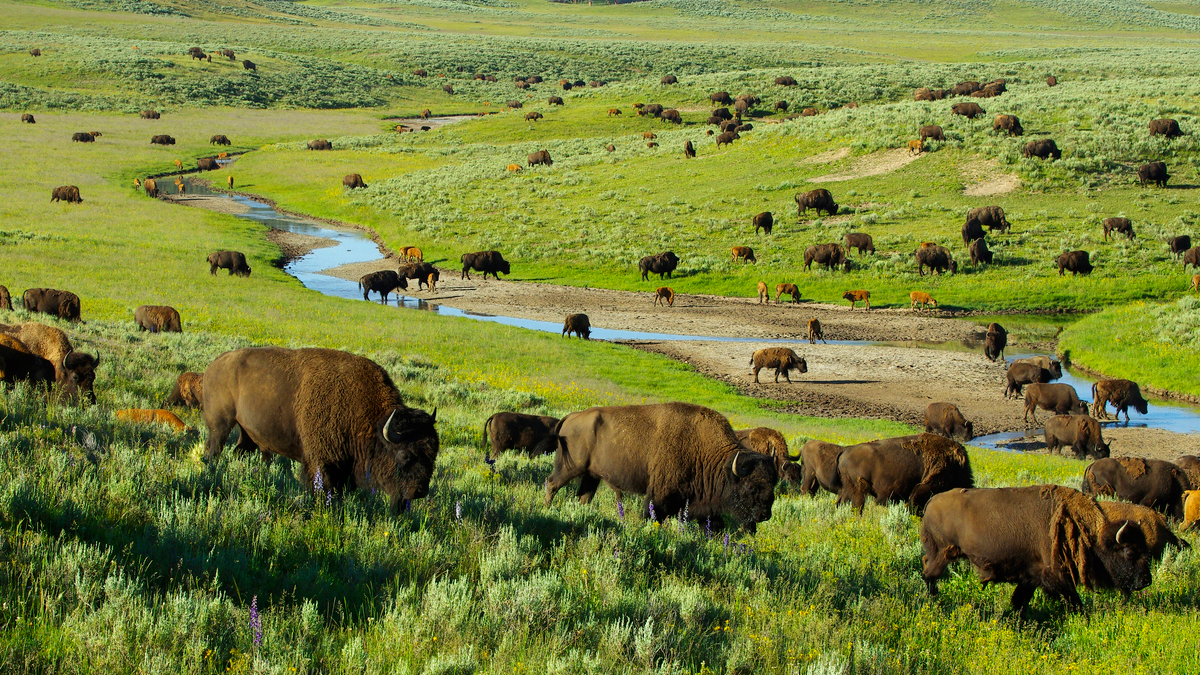
Herbivores: Bison in North America, wildebeests in Africa, pronghorns, zebras, antelopes, and kangaroos in Australia. These animals feed on grasses, often migrating across vast distances in search of fresh pastures.
-
Predators: Lions, cheetahs, wolves, and hyenas are adapted to chase across open land, relying on speed, strategy, and teamwork.
-
Birds: Grasslands host ground-nesting birds like ostriches, bustards, and cranes, as well as smaller birds that feed on seeds and insects.
-
Insects: Grasshoppers, bees, and butterflies are abundant, forming a critical part of the food chain and aiding pollination.
Every species in the grasslands is connected. Grazing herbivores maintain the balance of plant life, predators control herbivore populations, and even decomposers like fungi and insects recycle nutrients back into the soil.
Migration: The Pulse of the Plains
One of the most spectacular features of grassland wildlife is migration. In Africa’s Serengeti, millions of wildebeests and zebras move in search of rain and fresh grass, followed closely by predators. In North America, bison historically roamed in vast herds, shaping the landscape as they moved. These migrations are not random; they are a rhythm, a heartbeat of the grasslands, essential to the survival of both plants and animals.
Human Impact
Grasslands are fragile despite their expansiveness. Agriculture, urbanization, and overgrazing have transformed huge areas into farmland, reducing habitat for native wildlife. Fires, once natural, are sometimes suppressed or intensified by humans, disrupting the balance of the ecosystem. Conservation efforts now focus on protecting remaining grasslands, reintroducing species, and managing land sustainably.
Why Grasslands Matter
Grasslands are more than a home for wildlife. They are crucial for the planet’s health:
-
They store carbon in their soils, helping regulate the climate.
-
Their deep roots prevent erosion and maintain fertile soil.
-
They support biodiversity, from microbes in the soil to apex predators on the plains.
By preserving grasslands, we protect a system that sustains life on multiple levels — from the smallest grasshopper to the fastest predator.
The Living Landscape
Standing on a grassland, the wind rustles the grasses like waves on an ocean. You might see a lone lion in the distance, a flock of birds taking flight, or a herd of antelope moving with quiet grace. Everything is connected: the soil, the plants, the herbivores, the predators, the insects, the climate. It is a place where survival, beauty, and resilience coexist, and where every blade of grass plays a part in the story of life.
Grasslands remind us that even seemingly simple landscapes can be bursting with complexity and wonder — ecosystems shaped by wind, water, fire, and life itself, teaching us the power of balance and the importance of every species.
via ChatGPT |