The Amazon Rainforest’s Biodiversity: The Lungs and Library of Life
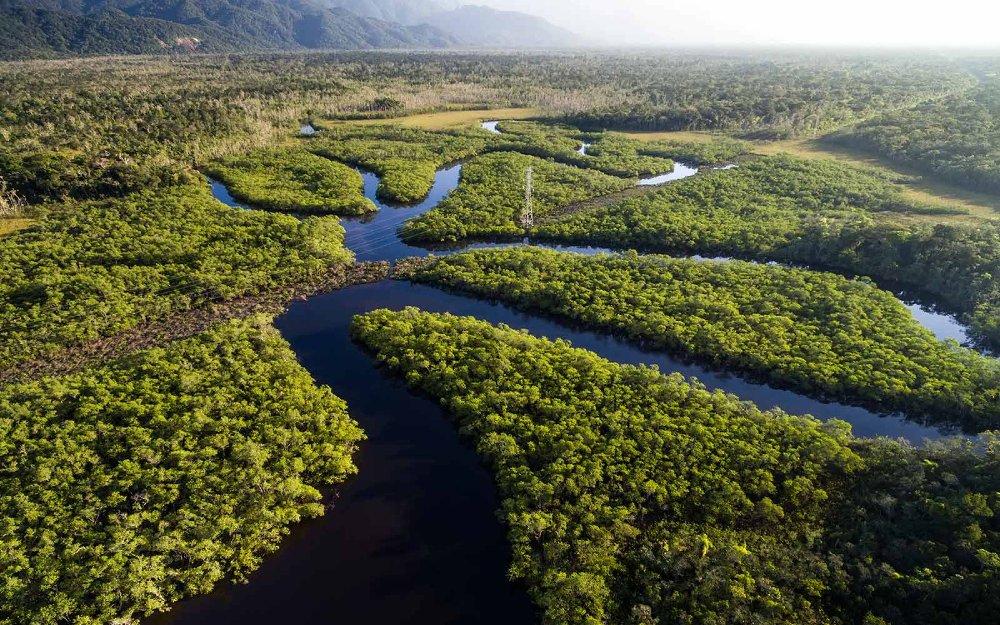
Close your eyes and picture the Amazon rainforest. Endless green stretches in every direction, sunlight filtering through towering trees, the air thick with moisture and the hum of life. The Amazon is not just a forest; it is a universe of living things, a place where life thrives in forms so abundant and varied that even scientists continue to discover new species every year.
Stretching across nine South American countries and covering roughly 5.5 million square kilometers, the Amazon is home to more than 10% of the world’s known species. That’s trees, plants, mammals, birds, insects, fungi, and microbes — each playing a role in the delicate, intricate web of life that has persisted for millennia.
A Forest Like No Other
Walk through a single hectare (about the size of a football field) in the Amazon, and you could encounter up to 300 different species of trees. Vines twist around trunks, orchids cling to branches, and bromeliads collect rainwater in their cup-like leaves, creating microhabitats for frogs, insects, and tiny fish. The forest floor, dappled with light, is alive with beetles, jaguars, and tapirs moving through the undergrowth. Every layer — from canopy to soil — is bursting with life.
The diversity of the Amazon is staggering:
-
Mammals: Jaguars, sloths, capybaras, and the elusive Amazon river dolphin.
-
Birds: Harpy eagles soar above, macaws splash the treetops with color, and countless hummingbirds flit from flower to flower.
-
Reptiles and Amphibians: Poison dart frogs, anacondas, caimans — many species found nowhere else on Earth.
-
Insects: The Amazon is a kingdom of butterflies, ants, beetles, and mosquitoes — millions of individual insects in a single square kilometer.
Why So Many Species?
The Amazon’s incredible biodiversity exists because of time, climate, and space. The forest is ancient, with ecosystems that have evolved over tens of millions of years. Its warm, humid climate allows life to thrive year-round. And the sheer size of the rainforest provides countless niches — tiny ecological “homes” — allowing species to specialize, adapt, and evolve without directly competing with others.
Rivers crisscross the forest, mountains in the west provide highlands, and seasonal flooding creates wetlands, each supporting unique communities of plants and animals. This complexity is why scientists call the Amazon not just a forest, but a living library of life.
Interconnected Life
No species exists in isolation. Trees depend on insects and birds for pollination. Jaguars control herbivore populations, keeping forests balanced. Fish and amphibians recycle nutrients during seasonal floods. Even fungi and bacteria in the soil play essential roles in decomposition, feeding plants and sustaining the forest’s cycle of life.
Destroy one piece, and the effects ripple outward. This interdependence makes the Amazon fragile despite its abundance — a reminder that biodiversity is not just about numbers, but about connections.
Threats to the Amazon
Sadly, this treasure trove of life faces unprecedented threats. Deforestation for agriculture, logging, mining, and infrastructure development is shrinking the forest at alarming rates. Climate change alters rainfall patterns, putting additional stress on ecosystems. Fires, whether natural or human-made, devastate habitats and release massive amounts of carbon into the atmosphere.
Each tree cut down, each patch of forest lost, is more than the loss of a single species — it is the unraveling of an intricate web that has evolved over millions of years.
The Importance of Conservation
Protecting the Amazon is not just about saving wildlife; it is about protecting a system that regulates the global climate, produces oxygen, and supports the livelihoods of millions of people. Scientists, indigenous communities, and conservationists work tirelessly to preserve it, recognizing that the forest’s biodiversity is irreplaceable.
A Living Miracle
The Amazon rainforest reminds us that life can flourish in unimaginable abundance and complexity. Its biodiversity is a testament to evolution’s creativity, a symphony of color, sound, and motion that humankind can only marvel at. From the smallest insect to the mightiest jaguar, every organism plays a role in this vast living mosaic.
Standing in the Amazon, one feels both humbled and inspired. It is a place where life does not just survive — it thrives, overflows, and surprises at every turn. The forest is a reminder that the Earth’s greatest treasures are often hidden, waiting for us to recognize their value before they vanish.
via ChatGPT |