The gallery with all subgalleries and compositions will be permanently deleted and cannot be recovered. Are you sure?
Executing...

Name or e-mail of your friend, to whom the message will be sent:

Please, edit the text of the message you are about to send.

The Arctic ecosystem

Sonya

The Arctic Ecosystem: Life at the Edge of the World

Far to the north, where the sun barely rises in winter and barely sets in summer, lies a land of extremes. Ice stretches as far as the eye can see, winds bite with frozen intensity, and the ocean’s surface is a shifting expanse of ice floes. This is the Arctic, one of Earth’s harshest environments — yet, against all odds, it is teeming with life.

The Arctic ecosystem is a story of adaptation, resilience, and interconnection. Life here is not abundant in the way tropical forests are, but it is astonishing in how it survives and thrives under conditions that would overwhelm most species.


The Land of Ice and Snow
The Arctic tundra, a vast treeless plain, is home to hardy plants like mosses, lichens, and dwarf shrubs. These plants grow close to the ground, absorbing warmth from the soil and resisting icy winds. During the short summer, they burst into color, providing food for herbivores like caribou, Arctic hares, and lemmings.

Predators like Arctic foxes and snowy owls roam the tundra, constantly hunting and adapting to the extreme cold. Every plant and animal here has evolved to survive scarcity, endure harsh winters, and make the most of fleeting summers.


Life on the Ice
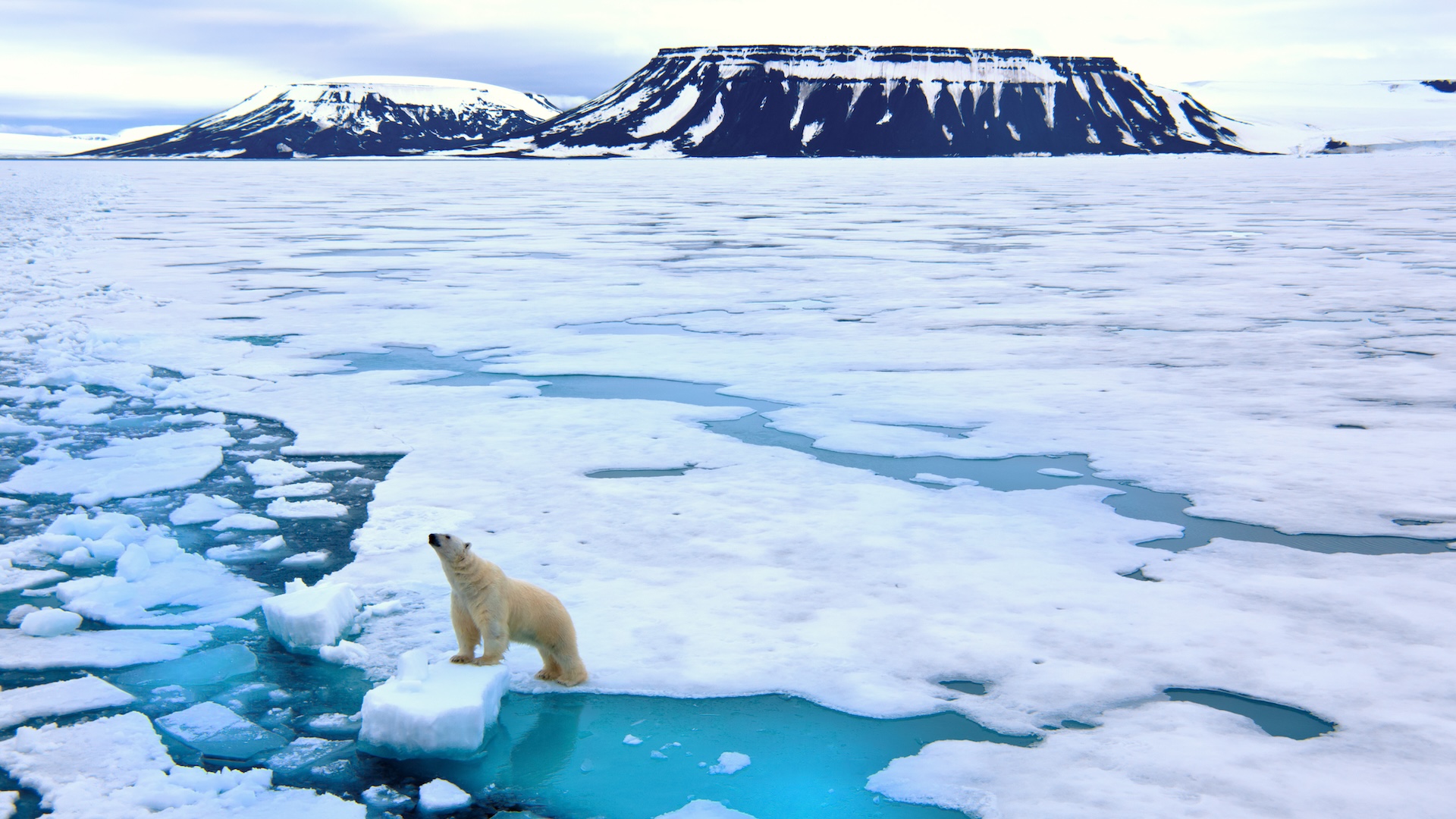
The frozen Arctic Ocean is no wasteland. Beneath the ice floats a world rich in plankton, the foundation of the food chain. Tiny shrimp-like krill feed on the plankton, fish feed on the krill, seals and walruses feed on the fish, and polar bears patrol the ice, hunting seals as the apex predator.

Even the smallest creatures are vital. Arctic cod, for example, store energy for the ecosystem by feeding on plankton and passing it up the chain. The Arctic is a web of life, delicately balanced and deeply interconnected.


Migration and Seasonal Rhythms
Much of Arctic life is dictated by the seasons. In summer, the sun never sets, allowing plants to grow rapidly and animals to reproduce. Migratory birds arrive in massive numbers to feed and nest, taking advantage of the short abundance. In winter, darkness covers the land, forcing animals to hibernate, migrate, or rely on stored energy to survive.

These rhythms have persisted for thousands of years, shaping the behavior, breeding, and survival strategies of Arctic species.


Adaptations of Arctic Wildlife
The Arctic’s extreme conditions have produced some of nature’s most remarkable adaptations:

  • Polar bears have thick fur and a layer of fat to insulate against the cold, and they are powerful swimmers, hunting seals across icy waters.

  • Arctic foxes grow white coats in winter to blend with the snow and change to brown in summer to match the tundra.

  • Walruses and seals have blubber that allows them to survive in icy waters, while penguin-like seabirds (though only in the southern hemisphere) show parallel adaptations in polar environments.

Even tiny insects and plants survive freezing temperatures, entering states of dormancy until conditions improve.


The Human Connection
Indigenous peoples, such as the Inuit, have lived in harmony with the Arctic ecosystem for thousands of years. They hunt sustainably, navigate the ice and snow with incredible skill, and rely on the rhythms of nature for survival. Their knowledge provides insights into the Arctic that modern science is only beginning to understand.


Threats to the Arctic
The Arctic is warming faster than almost any other region on Earth. Melting ice threatens polar bears, seals, and walruses; shifts in plankton populations disrupt food chains; and thawing permafrost releases carbon, accelerating climate change. Human activity, from shipping routes to oil exploration, further stresses this fragile ecosystem.

Protecting the Arctic is not just about preserving its iconic species — it is about maintaining a critical part of Earth’s climate system, which affects the entire planet.


A World of Resilience and Wonder
The Arctic ecosystem is harsh, but it is far from lifeless. It is a place where every organism, from microscopic plankton to mighty polar bears, demonstrates ingenuity, adaptation, and survival. It is a world defined by extremes, yet full of life, rhythm, and connection.

Standing on the ice, listening to the wind whistle across the frozen plains, it is impossible not to feel awe. The Arctic teaches us that life persists in the most unlikely places, that ecosystems can flourish even at the edge of survival, and that the balance of nature is both delicate and extraordinary.


via ChatGPT

Author:   Sonya  Version:  1  Language: English  Views: 0

 Rating:  0 by 0

Picture: Source: https://www.google.com/url?sa=i&url=https%3A%2F%2Fwww.livescience.com%2Fplanet-earth%2Farctic&psig=AOvVaw3R5RFsQaZ658YCpeRgNDZY&ust=1755942580137000&source=images&cd=vfe&opi=89978449&ved=0CBUQjRxqFwoTCPjtzICSno8DFQAAAAAdAAAAABAE

Short link: https://www.sponsorschoose.org/a447
Short link to this version: https://www.sponsorschoose.org/n478
Created by Sonya at 2025-08-22 02:50:28
Last modified by Sonya at 2025-08-22 11:13:10