| Edit | Map | Home |  |
New Post | New Gallery |
Support
|

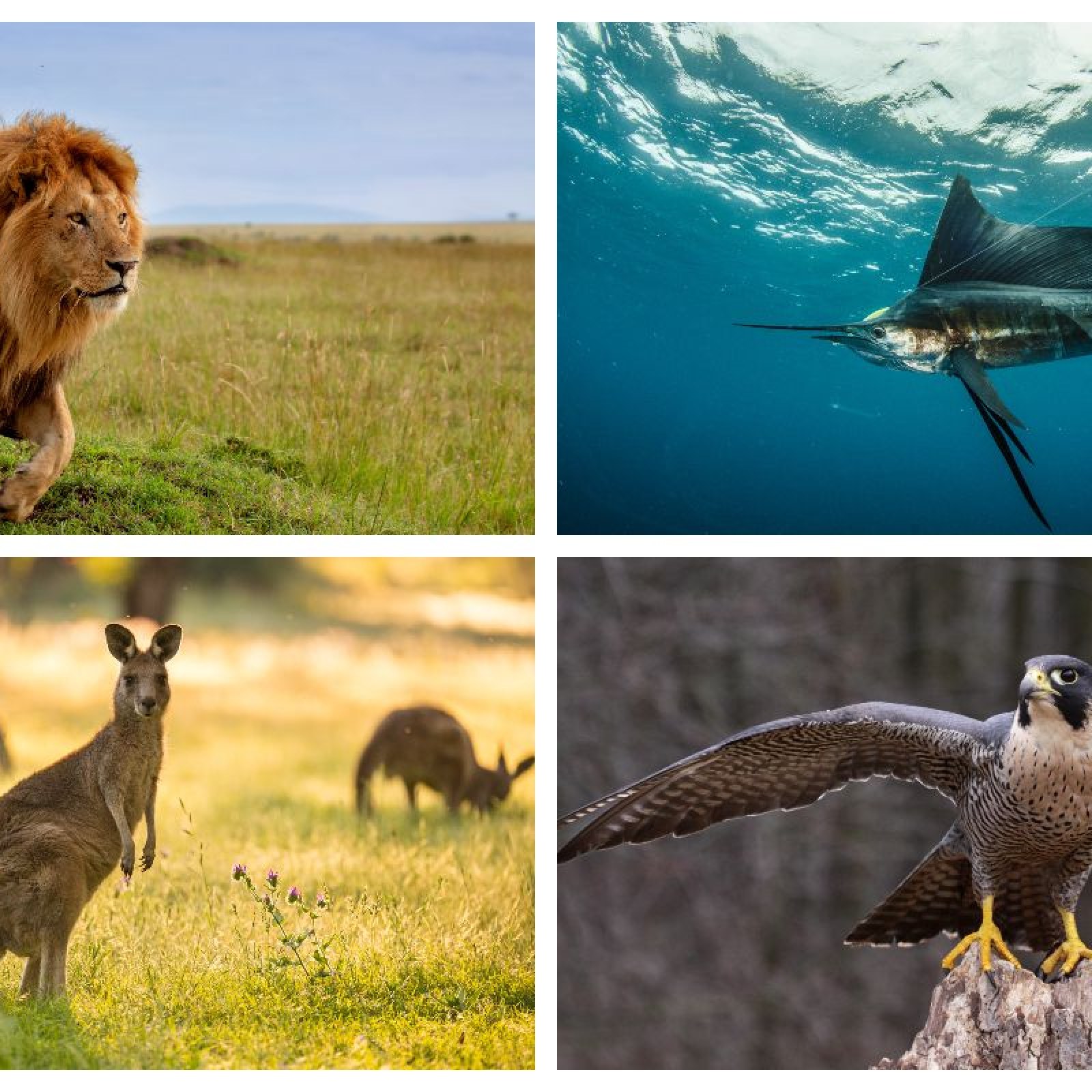 | |
The Fastest Animals on Earth: Masters of MotionSpeed has always captivated the human imagination. From ancient hunters chasing antelope to modern athletes racing on tracks, we’ve looked at the natural world and marveled at creatures that seem to defy physics. For animals, though, speed is more than spectacle — it is life itself. It means the difference between catching a meal or becoming one. Across land, sky, and sea, evolution has crafted champions of velocity, each adapted to their environment in breathtaking ways. The King of the Sky: The Peregrine Falcon Its adaptations are remarkable: streamlined feathers, a keel-shaped body, and special membranes over its eyes that protect them from wind pressure. This is speed not for show but for the hunt — a strike delivered with deadly precision, too fast for a pigeon or duck below to react. The Land Sprinter: The Cheetah The cheetah’s body is a marvel of speed engineering: long legs, a flexible spine that stretches and contracts like a spring, semi-retractable claws for traction, and a long tail that acts like a rudder for balance during high-speed turns. But speed comes at a cost: cheetahs tire quickly, and if they don’t catch their prey within seconds, they must abandon the chase. In this way, their sprint is both their greatest strength and their greatest limitation. Masters of the Sea: Sailfish and Beyond Other marine speedsters include the marlin and black marlin, reaching similar bursts of velocity. For these predators, speed is the ultimate weapon: a sudden dash to strike a school of sardines or evade a hungry shark. Speed in the Unexpected Or the pronghorn antelope of North America. While it cannot match the cheetah in a short sprint, it can maintain speeds of 55 miles per hour (88 km/h) for much longer distances. Unlike the cheetah, the pronghorn is an endurance runner, built not just to catch but to survive. Evolution shaped it during an age when now-extinct predators, like the American cheetah, once roamed. Today, the pronghorn still carries that heritage of speed. Why Speed Matters But speed is not always about being the fastest. It is about timing. A cheetah that launches too soon wastes its energy. A falcon that misjudges its dive misses its target. In nature, speed without precision is meaningless. The Human Fascination And perhaps it reminds us of our own pursuit of speed — from racing horses to building cars, planes, and rockets. In a way, our machines are extensions of a primal envy: the desire to move as fast as the falcon, the cheetah, or the sailfish. The Champions of Velocity
Each is a reminder that speed comes in many forms: bursts, endurance, flight, or swim. Each represents an evolutionary masterpiece, honed not for glory but survival. When we speak of the fastest animals on Earth, we are not just talking about records. We are telling the story of life’s endless race — predator against prey, hunger against survival, motion against stillness. In this race, speed is not just power. It is destiny.
via ChatGPT |
Author: Sonya Version: 1 Language: English Views: 0
Picture: Source: https://www.google.com/url?sa=i&url=https%3A%2F%2Fwww.newsweek.com%2Fpictures-fastest-animals-earth-936780&psig=AOvVaw1ptwL7fEAhNw9U8gh3-G0s&ust=1755862164490000&source=images&cd=vfe&opi=89978449&ved=0CBUQjRxqFwoTCJDMtr_mm48DFQAAAAAdAAAAABAE
|
Short link: https://www.sponsorschoose.org/a427
Short link to this version: https://www.sponsorschoose.org/n458
Created by Sonya at 2025-08-21 04:30:51
Last modified by Sonya at 2025-08-22 20:05:39
|