The Science Behind Rainbows: Nature’s Prism in the Sky
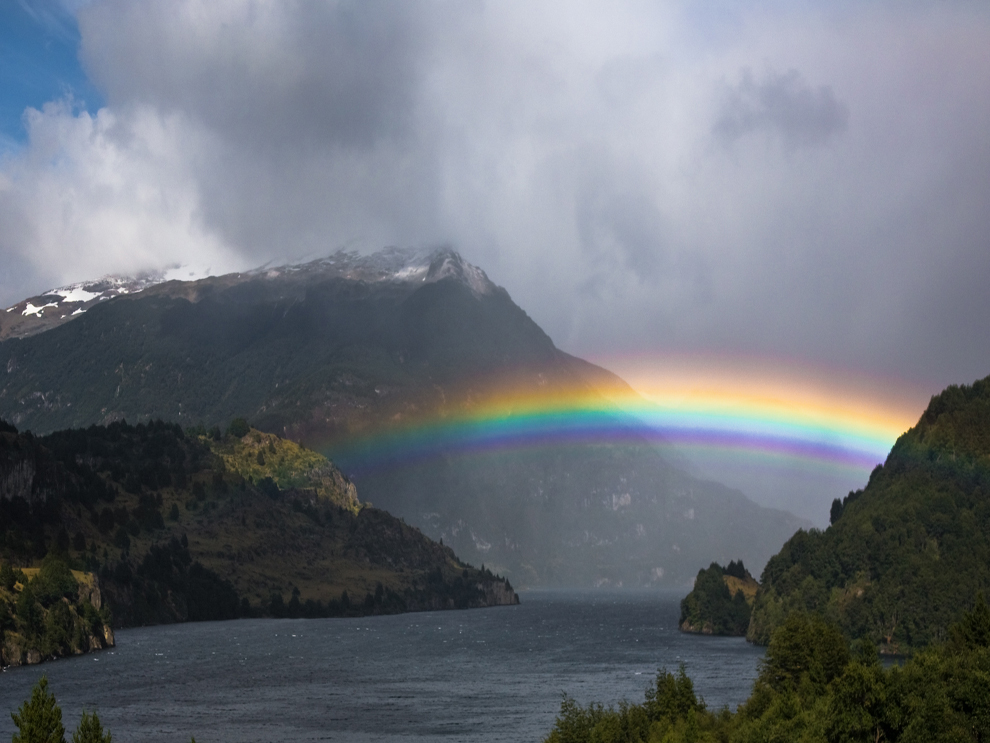
It begins with something ordinary: a rain shower, the patter of drops falling from gray clouds. Then, almost suddenly, the world transforms. The sun breaks through, and across the sky arches a luminous curve of colors — red, orange, yellow, green, blue, indigo, violet. A rainbow.
People stop in their tracks. Children point. Cameras come out. And for a few moments, the everyday world feels enchanted. But behind that beauty lies a story of light, water, and the physics of color — a story as old as the Earth itself.
The Dance of Light and Water
At the heart of every rainbow is sunlight. Sunlight looks white to the human eye, but in reality, it’s made of many colors blended together. When that light meets a raindrop, the magic begins.
The droplet acts like a tiny prism. As light enters it, the light bends — a process called refraction. Inside the drop, the light reflects off the inner surface and then bends again as it leaves. Each color bends slightly differently, which is why the white light spreads into its component colors. Red bends the least, violet bends the most, and together they stretch into the arc of a rainbow.
Multiply this effect by millions of raindrops, each bending and reflecting sunlight, and the sky becomes painted with bands of color.
Why Arcs, Not Stripes
Rainbows always appear as arcs, not lines. This happens because the light emerges at a specific angle — about 42 degrees from the direction opposite the sun. When you see a rainbow, you’re actually looking at countless raindrops all reflecting light toward you at just the right angle. Move slightly, and the rainbow seems to move with you. In a sense, no two people ever see the exact same rainbow.
Double Rainbows and Beyond
Sometimes, if conditions are just right, you’ll see not one rainbow but two. The second, fainter arc forms when light reflects twice inside the droplet before escaping. This “double rainbow” appears with its colors reversed — red on the inside, violet on the outside. Even more rarely, faint additional arcs, called supernumerary rainbows, ripple inside the main bow like echoes of light.
Rainbows in Myth and Legend
Long before science explained them, rainbows inspired stories. To the Norse, the rainbow was the Bifröst, a bridge between Earth and the realm of the gods. In Irish folklore, it was the hiding place of leprechauns’ pots of gold. For many cultures, rainbows symbolized hope, peace, or a message from the divine.
Even today, though we understand the physics, the sight of a rainbow still feels magical — as though the universe is briefly showing us a secret.
Rainbows You Don’t Expect
Not all rainbows need rain. Spray from a waterfall, mist from ocean waves, or even the fine droplets thrown up by a garden hose can create them. In colder climates, “moonbows” appear — rainbows lit by the moon instead of the sun, pale and ghostly in the night sky. High in the atmosphere, ice crystals sometimes create halo-like arcs of light, cousins to the rainbow that remind us light plays everywhere.
The Beauty of Perspective
In truth, a rainbow is a circle of light, not just an arc. From the ground, the horizon cuts it off, so we only see half. But from an airplane or mountaintop, it’s sometimes possible to glimpse a full circular rainbow — a perfect wheel of color floating in the air. It’s a reminder that what we see depends not just on physics, but on where we stand.
A Window Into Light Itself
The science of rainbows is more than a curiosity; it’s a key to understanding the nature of light. By splitting white light into its colors, rainbows reveal the hidden richness of something we usually take for granted. They are natural demonstrations of physics, painting the sky with lessons in optics — and beauty.
The Eternal Promise
Rainbows are fleeting, appearing only when light, water, and the eye align. That impermanence is part of their charm. They remind us that beauty often depends on timing, on noticing, on being present in the moment.
So next time you see a rainbow, know that it’s not just a splash of colors after rain. It’s sunlight, water, and physics working together to create art in the sky. It’s science dressed as magic, a promise from the universe that even storms can end with wonder.
via ChatGPT |