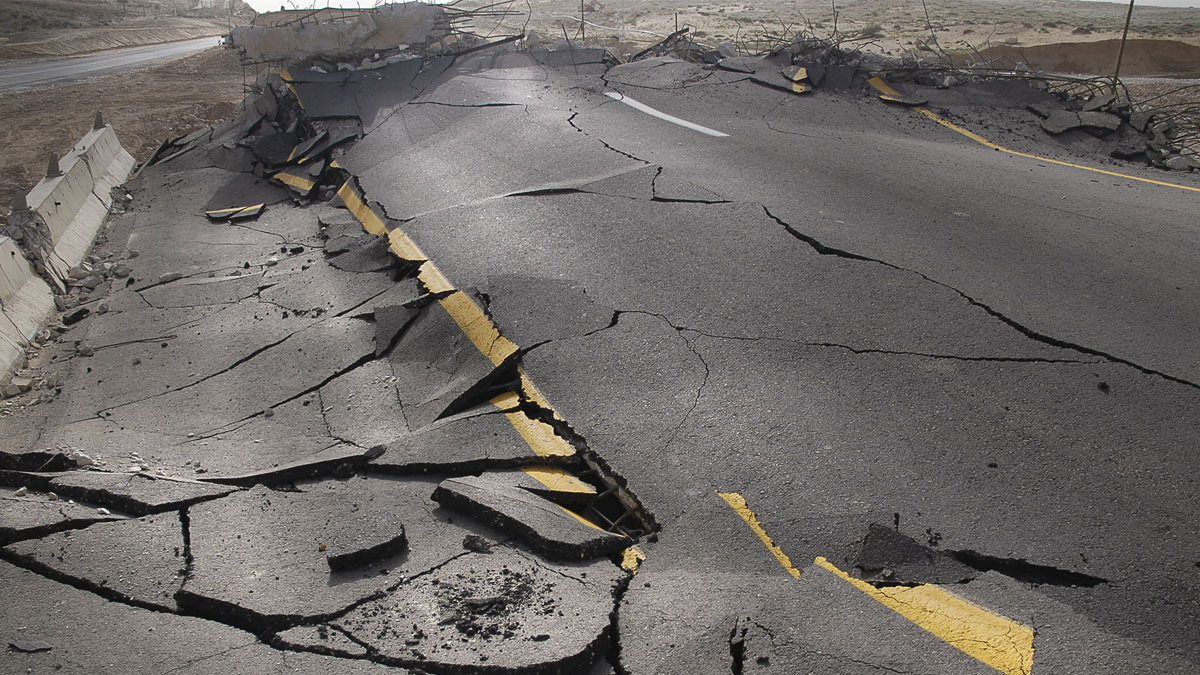
What Causes Earthquakes: The Restless Heart of the Earth
Beneath our feet, the Earth is never truly still. To us, the ground feels solid, unchanging, eternal. But deep below the surface, immense forces are constantly at work. The Earth’s crust — that thin shell of rock we live on — is broken into gigantic pieces called tectonic plates, and these plates are always moving. Sometimes the movement is slow and harmless, unnoticed in our daily lives. But sometimes, when pressure builds and the crust suddenly shifts, the world above is shaken. That is the moment of an earthquake.
The Restless Planet
Earthquakes begin with the very structure of our planet. Beneath the continents and oceans lies a layer of molten rock that slowly churns like a pot of soup on the stove. This churning drives the plates above to drift — colliding, pulling apart, or sliding past each other. Though they move only inches each year, the pressure at their boundaries is immense.
At certain points, the plates get stuck, unable to glide smoothly. Over decades or centuries, stress builds up like a wound spring. When the rocks can no longer hold the strain, they snap. Energy, stored for so long, bursts outward in waves that travel through the ground. The Earth trembles, buildings sway, and mountains themselves can shift.
The Fault Lines
Most earthquakes happen along fault lines — cracks in the Earth’s crust where plates meet or fracture. Some faults are quiet for centuries, giving no hint of the power they hide. Then, suddenly, they release devastating energy.
The San Andreas Fault in California, for example, marks the boundary where the Pacific Plate and North American Plate grind past one another. The Ring of Fire, circling the Pacific Ocean, is a hotspot of earthquakes and volcanoes, as plates collide and dive beneath each other. Each fault is like a scar, a reminder that the ground we walk on is alive and shifting.
The Ripple Effect
When an earthquake strikes, seismic waves radiate from the epicenter — like ripples spreading across a pond when a stone is thrown in. The ground rises and falls, twists and shudders. Depending on the strength and depth, these waves can rattle a teacup on a table, or topple entire cities.
Some earthquakes trigger tsunamis, as the sudden shift of the seafloor displaces massive amounts of water. Others spark landslides or aftershocks — smaller quakes that follow as the crust resettles. Each quake is part of a chain reaction, the Earth adjusting itself in a continuous balancing act.
A Force Older Than History
Earthquakes are as old as the planet itself. Ancient civilizations tried to explain them through myth and legend: in Japan, people once believed a giant catfish named Namazu thrashed beneath the islands, causing the ground to shake. In Greece, they were seen as the wrath of Poseidon, god of the sea.
Today, we understand them as natural consequences of a restless planet. Yet even with all our science, they remain unpredictable. We can map fault lines and measure stress, but no one can say exactly when the Earth will release its power.
Why They Matter to Life
Though earthquakes bring destruction, they are also part of the Earth’s creative forces. They raise mountains, reshape coastlines, and release gases that fertilize soils. Without tectonic shifts, the planet would be geologically dead — and life itself might not exist as we know it. In their violence lies the energy that keeps the Earth alive.
Living with Earthquakes
For humans, the challenge is not to stop earthquakes — that is impossible — but to live wisely with them. We design buildings to withstand shaking, practice drills in schools, and monitor the planet with networks of seismographs. Knowledge, preparation, and respect for the Earth’s power are our best defenses.
The Earth’s Pulse
So what causes earthquakes? At its heart, it is the Earth reminding us that it is alive. The plates shift, the crust breaks, and energy flows outward like a heartbeat. Each quake is a pulse of the planet’s restless energy — sometimes gentle, sometimes catastrophic, always a reminder that beneath the quiet ground is a force beyond our control.
via ChatGPT |