The gallery with all subgalleries and compositions will be permanently deleted and cannot be recovered. Are you sure?
Executing...

Name or e-mail of your friend, to whom the message will be sent:

Please, edit the text of the message you are about to send.

How the piano works inside

Sonya

How the Piano Works Inside

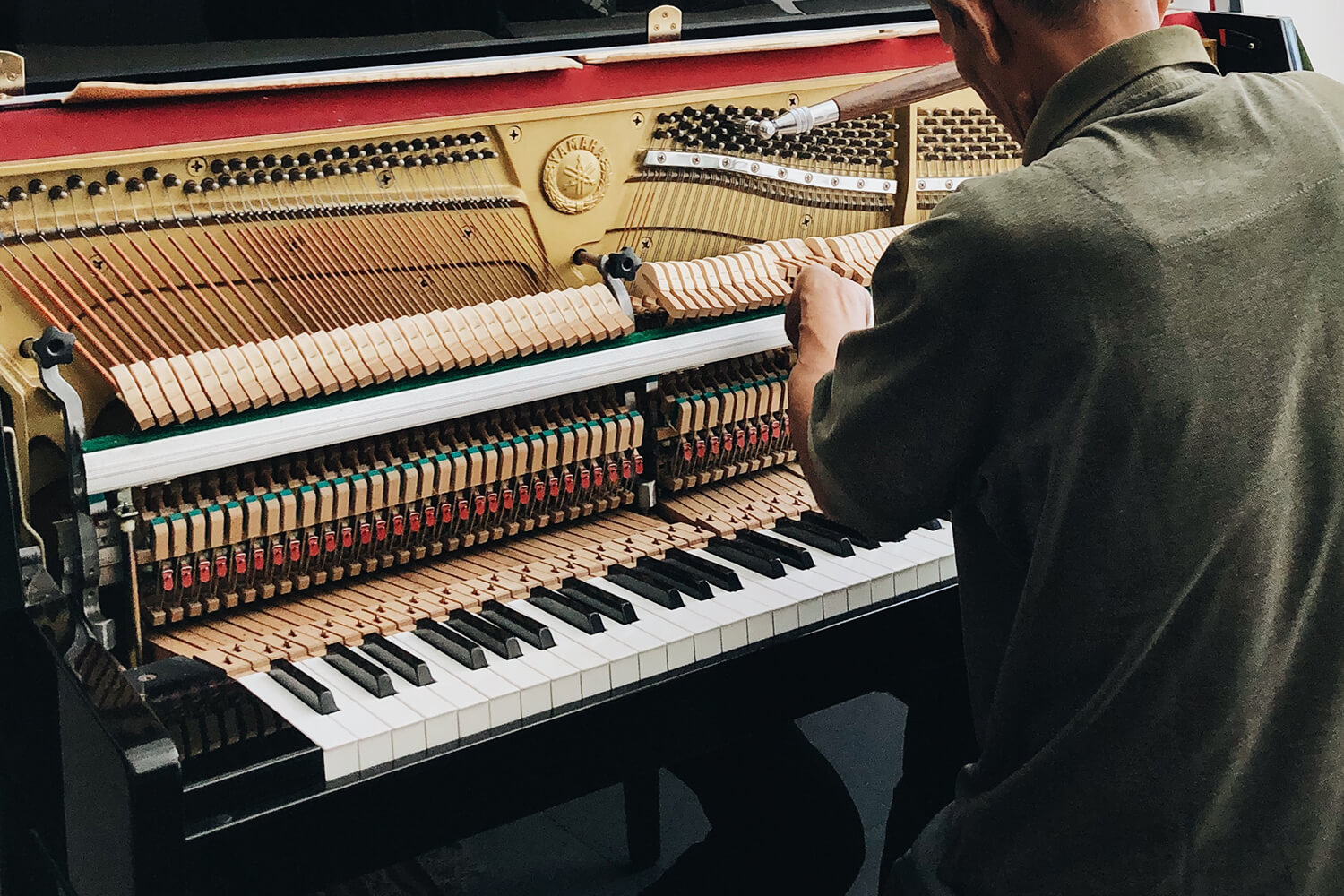
The piano is more than just an elegant piece of furniture — it’s a precision-engineered machine and a miniature orchestra in one. Hidden beneath its lid is a network of wood, metal, and felt parts working together with exacting precision to turn your keystrokes into music that can be soft as a whisper or loud enough to command an entire concert hall.


1. The Piano’s Ancestry

Before the piano, musicians had the harpsichord and the clavichord.

  • Harpsichord: Plucked strings — bright but with no control over volume.

  • Clavichord: Struck strings — could vary volume, but too quiet for large spaces.
    In 1700, Italian inventor Bartolomeo Cristofori combined the best of both: the ability to play both loud (forte) and soft (piano). His “gravicembalo col piano e forte” was the birth of the modern piano.


2. The Action: A Chain Reaction of Motion

When you press a key, you start a carefully timed sequence:

  1. Key Lever – Your finger pushes down the front, the back end rises inside the piano.

  2. Whippen – A pivoting piece that transfers motion upward to the hammer assembly.

  3. Jack – A small lever that propels the hammer toward the string.

  4. Escapement – This ingenious device lets the hammer “escape” right before striking, so it rebounds freely without muffling the note.

  5. Backcheck – Catches the hammer after the strike, ready for the next note.

Fun fact: In a grand piano, this mechanism is arranged horizontally; in an upright, it’s vertical — one reason grands are more responsive.


3. Hammers and Strings: The Sound Generators

  • Hammers – Compressed wool felt over a wooden core. The felt hardens over time, so piano technicians “voice” the hammers by softening or reshaping them.

  • Strings – Treble notes use three strings per key (unison strings) for a richer sound; middle notes use two; bass notes have one thick string wound in copper for depth.

  • Tension – A full set of piano strings can hold over 18–20 tons of tension, all anchored to a cast iron plate (the “harp”).


4. The Soundboard: The Amplifier

The strings themselves barely make a sound. The soundboard, usually made of spruce, vibrates with the strings, turning their tiny movements into resonant waves that fill the room.

  • Bridges glued to the soundboard transfer the vibration from the strings.

  • The soundboard’s slight curve (crown) keeps it under tension, giving it a lively, responsive quality.


5. The Pedals: The Piano’s Color Palette

  1. Right Pedal – Sustain/Damper Pedal: Lifts all dampers, allowing notes to resonate.

  2. Left Pedal – Una Corda/Soft Pedal: Shifts the action so hammers hit fewer strings, changing both volume and tone color.

  3. Middle Pedal – Sostenuto (on grands): Sustains only the notes you’re holding when pressed, leaving others unaffected.

    • On many uprights, the middle pedal is instead a practice mute, dropping felt between hammers and strings for quieter playing.


6. Dynamics and Touch

The piano’s magic lies in its responsiveness:

  • Play softly → hammers strike slowly → mellow, quiet sound.

  • Play forcefully → hammers strike faster → brighter, louder sound.
    This velocity-sensitive action makes the piano one of the most expressive instruments ever invented.


7. Maintenance: Keeping It Alive

Pianos require regular tuning — usually twice a year — because wood and strings react to humidity and temperature changes. A professional “regulation” adjusts the thousands of moving parts so the touch feels even.


8. Fun and Surprising Facts

  • A grand piano has around 230 strings.

  • The longest bass string in a concert grand can be over 2.5 meters (8 feet) long.

  • Steinway & Sons still uses soundboard designs from the 19th century.

  • The Guinness World Record for fastest piano key repetition is about 20 strikes per second — possible thanks to the double escapement system.

via ChatGPT

Author:   Sonya  Version:  1  Language: English  Views: 0

 Rating:  0 by 0

Picture: Source: https://www.google.com/url?sa=i&url=https%3A%2F%2Fstories.oktav.com%2Fen%2Fs%2Fhow-the-piano-works&psig=AOvVaw0n6LQm8uEquM2B2nIEAxzz&ust=1755275515053000&source=images&cd=vfe&opi=89978449&ved=0CBUQjRxqFwoTCMjV_P_cio8DFQAAAAAdAAAAABAR

Short link: https://www.sponsorschoose.org/a371
Short link to this version: https://www.sponsorschoose.org/n402
Created by Sonya at 2025-08-14 09:34:29
Last modified by Sonya at 2025-08-15 17:06:27