Ця галерея з усіма галереями та композиціями всередині її буде вилучена і не може бути відтворена. Ви впевнені?
Виконання...

Ім'я або е-мейл вашого друга, кому буде надіслано це повідомлення:

Будь ласка, відредагуйте текст, як ви бажаєте.

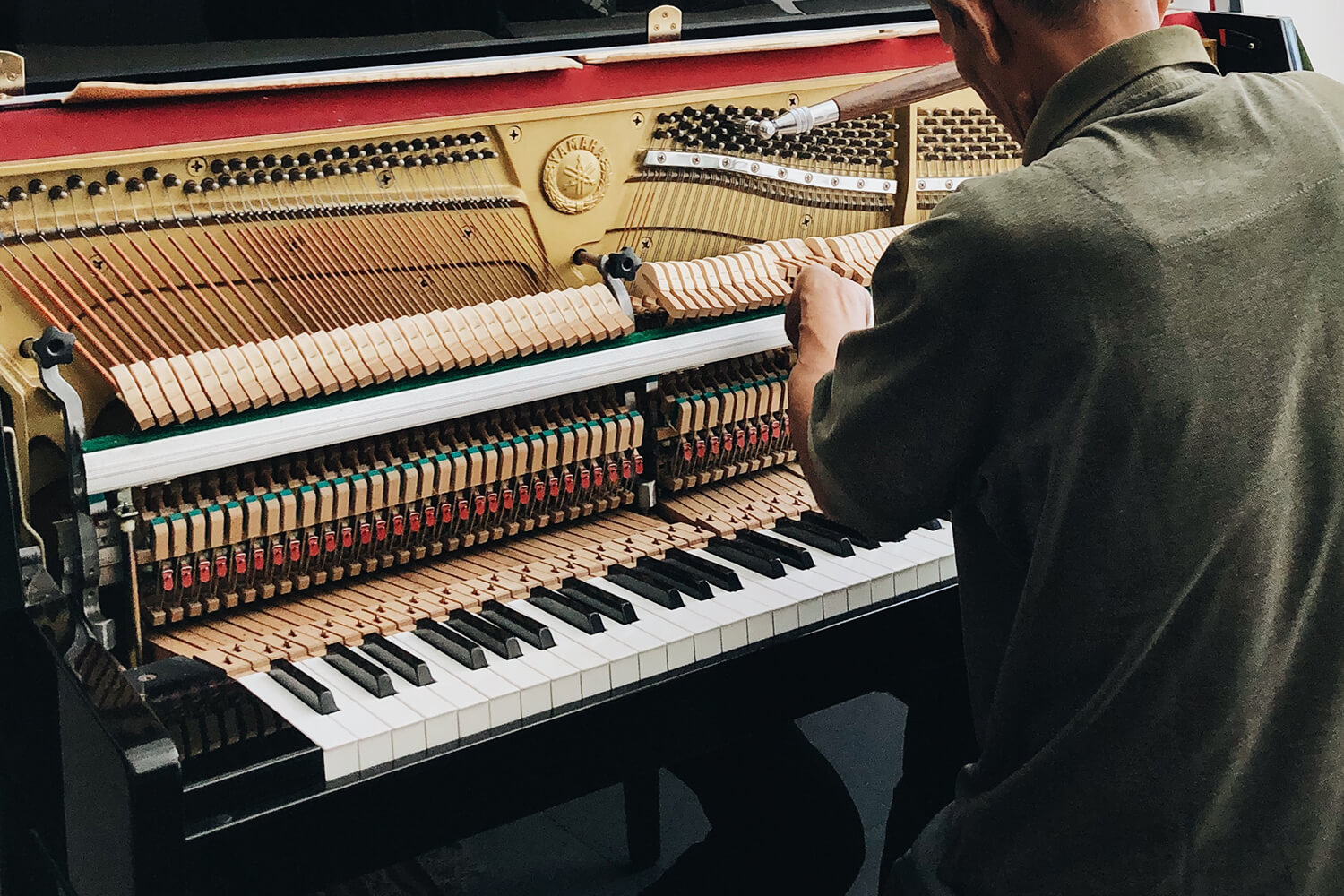
How the piano works inside

Sonya

How the Piano Works Inside

The piano is more than just an elegant piece of furniture — it’s a precision-engineered machine and a miniature orchestra in one. Hidden beneath its lid is a network of wood, metal, and felt parts working together with exacting precision to turn your keystrokes into music that can be soft as a whisper or loud enough to command an entire concert hall.


1. The Piano’s Ancestry

Before the piano, musicians had the harpsichord and the clavichord.

  • Harpsichord: Plucked strings — bright but with no control over volume.

  • Clavichord: Struck strings — could vary volume, but too quiet for large spaces.
    In 1700, Italian inventor Bartolomeo Cristofori combined the best of both: the ability to play both loud (forte) and soft (piano). His “gravicembalo col piano e forte” was the birth of the modern piano.


2. The Action: A Chain Reaction of Motion

When you press a key, you start a carefully timed sequence:

  1. Key Lever – Your finger pushes down the front, the back end rises inside the piano.

  2. Whippen – A pivoting piece that transfers motion upward to the hammer assembly.

  3. Jack – A small lever that propels the hammer toward the string.

  4. Escapement – This ingenious device lets the hammer “escape” right before striking, so it rebounds freely without muffling the note.

  5. Backcheck – Catches the hammer after the strike, ready for the next note.

Fun fact: In a grand piano, this mechanism is arranged horizontally; in an upright, it’s vertical — one reason grands are more responsive.


3. Hammers and Strings: The Sound Generators

  • Hammers – Compressed wool felt over a wooden core. The felt hardens over time, so piano technicians “voice” the hammers by softening or reshaping them.

  • Strings – Treble notes use three strings per key (unison strings) for a richer sound; middle notes use two; bass notes have one thick string wound in copper for depth.

  • Tension – A full set of piano strings can hold over 18–20 tons of tension, all anchored to a cast iron plate (the “harp”).


4. The Soundboard: The Amplifier

The strings themselves barely make a sound. The soundboard, usually made of spruce, vibrates with the strings, turning their tiny movements into resonant waves that fill the room.

  • Bridges glued to the soundboard transfer the vibration from the strings.

  • The soundboard’s slight curve (crown) keeps it under tension, giving it a lively, responsive quality.


5. The Pedals: The Piano’s Color Palette

  1. Right Pedal – Sustain/Damper Pedal: Lifts all dampers, allowing notes to resonate.

  2. Left Pedal – Una Corda/Soft Pedal: Shifts the action so hammers hit fewer strings, changing both volume and tone color.

  3. Middle Pedal – Sostenuto (on grands): Sustains only the notes you’re holding when pressed, leaving others unaffected.

    • On many uprights, the middle pedal is instead a practice mute, dropping felt between hammers and strings for quieter playing.


6. Dynamics and Touch

The piano’s magic lies in its responsiveness:

  • Play softly → hammers strike slowly → mellow, quiet sound.

  • Play forcefully → hammers strike faster → brighter, louder sound.
    This velocity-sensitive action makes the piano one of the most expressive instruments ever invented.


7. Maintenance: Keeping It Alive

Pianos require regular tuning — usually twice a year — because wood and strings react to humidity and temperature changes. A professional “regulation” adjusts the thousands of moving parts so the touch feels even.


8. Fun and Surprising Facts

  • A grand piano has around 230 strings.

  • The longest bass string in a concert grand can be over 2.5 meters (8 feet) long.

  • Steinway & Sons still uses soundboard designs from the 19th century.

  • The Guinness World Record for fastest piano key repetition is about 20 strikes per second — possible thanks to the double escapement system.

via ChatGPT

Автор:   Sonya  Версія:  1  Мова: Англійська  Переглядів: 0

 Рейтінг:  0 від 0

Рисунок: Посилання на джерело: https://www.google.com/url?sa=i&url=https%3A%2F%2Fstories.oktav.com%2Fen%2Fs%2Fhow-the-piano-works&psig=AOvVaw0n6LQm8uEquM2B2nIEAxzz&ust=1755275515053000&source=images&cd=vfe&opi=89978449&ved=0CBUQjRxqFwoTCMjV_P_cio8DFQAAAAAdAAAAABAR

Коротке посилання: https://www.sponsorschoose.org/a371
Коротке посилання на цю версію: https://www.sponsorschoose.org/n402
Автор - Sonya дата: 2025-08-14 09:34:29
Остання зміна - Sonya дата: 2025-08-15 17:06:27